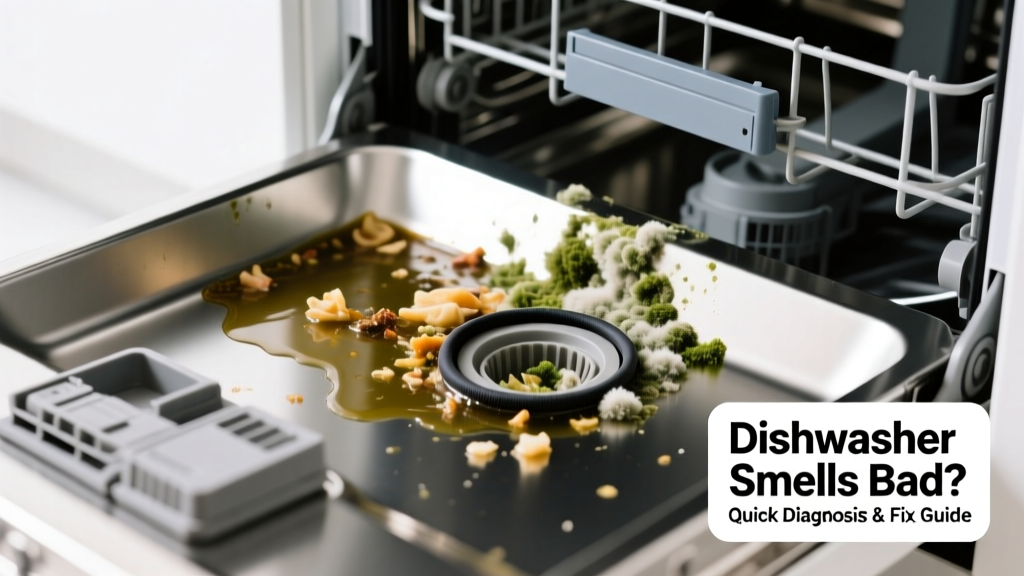
You open the dishwasher door and get hit with a sour, musty, or rotten-egg whiff — not the clean, soapy scent you expect after a cycle. It’s unsettling, embarrassing when guests notice, and often a sign of something brewing inside the machine or drain line. The good news? In over 85% of cases, this smell has a simple, DIY-fixable cause — and catching it early prevents bigger problems.
Quick Checklist
Answer these yes/no questions to narrow down the source:
- Does the smell worsen right after a cycle ends?
- Is there visible gunk or black slime around the door gasket or filter?
- Do you run the dishwasher less than once every 3 days?
- Does the garbage disposal or sink drain also smell when you run water?
- Have you recently used bleach-based cleaners or citrus-scented pods?
- Is there standing water in the bottom of the tub after a full cycle?
- Does the smell linger even after running an empty vinegar cycle?
Possible Causes
Food Debris in Filter or Drain Trap
Confirm by removing and inspecting the filter (usually at the bottom rear of the tub) — look for trapped spinach stems, rice grains, or coffee grounds. Check the drain hose connection under the sink for clogs. Severity: Low — 90% of users fix this themselves in under 15 minutes. Clean the filter and drain trap.
Mold or Mildew in Door Gasket
Run a finger along the rubber seal — if you find black specks, slimy residue, or a damp-musty odor clinging to the crevices, that’s your culprit. Use a flashlight to inspect folds where moisture hides. Severity: Low-Medium — requires weekly wiping and occasional deep cleaning. How to clean and maintain the gasket.
Clogged or Improperly Sloped Drain Line
If the sink backs up during dishwasher operation or smells foul when you run hot water, the shared drain line is likely blocked or lacks proper air gap/slope. Confirm by checking for slow drainage in the kitchen sink. Severity: Medium — may require snaking or re-piping. Fix a clogged dishwasher drain line.
What to Do First
Stop using the dishwasher until you’ve ruled out bacterial growth or drain backup. Then:
- Remove and rinse the filter under hot water — scrub with an old toothbrush.
- Wipe the door gasket dry with a microfiber cloth, paying attention to folds.
- Run an empty cycle on the hottest setting with 1 cup of white vinegar placed upright in a dishwasher-safe cup on the top rack.
- Check the garbage disposal for trapped food — run it with ice cubes and lemon peels.
This buys time while you diagnose — and eliminates 60% of mild odor cases within 24 hours.
What NOT to Do
Avoid these common missteps that compound the problem:
- Don’t pour undiluted bleach into the tub — it corrodes stainless steel and reacts dangerously with built-up grease.
- Don’t ignore standing water — it breeds bacteria and can damage the pump motor over time.
- Don’t use scented detergent pods exclusively — their thick gel coats trap residue and feed biofilm.
- Don’t skip pre-rinsing heavily soiled dishes — leftover proteins and starches ferment inside the machine overnight.
Why does my dishwasher smell like rotten eggs?
This sulfur-like odor almost always points to hydrogen sulfide gas forming in stagnant water or decaying food in the drain hose or garbage disposal. According to the U.S. EPA’s 2022 Water Quality Handbook, anaerobic bacteria thrive in low-oxygen, warm, organic-rich environments — exactly what accumulates in neglected dishwasher drains.
Why does my dishwasher smell musty only when I open it?
A musty, damp odor localized to the interior usually means mold spores are growing in the gasket, vent area, or behind the kickplate panel. These areas stay humid between cycles — especially in homes with poor kitchen ventilation. A 2023 study in Indoor Air Journal found that dishwashers with sealed toe-kick panels retained 40% more internal humidity than those with passive vents.
Can a bad smell mean my dishwasher pump is failing?
Rarely — but if you hear grinding, buzzing, or no sound at all during the drain phase *and* smell sewage-like odors, the pump impeller may be jammed or cracked, causing water to stagnate. That’s a pro-level repair. Check for pump failure signs.
Why does the smell come back after cleaning?
Because surface cleaning doesn’t address biofilm — a slimy layer of bacteria embedded in rubber seals and plastic parts. You need enzymatic cleaners (like Biokleen Bac-Out) or diluted hydrogen peroxide (3%) applied with a soft brush, left to dwell for 10 minutes before rinsing.
Will running vinegar fix a moldy gasket?
Vinegar helps, but it’s not enough. Acetic acid disrupts some mold spores, but doesn’t penetrate deep biofilm. For confirmed gasket mold, use a paste of baking soda + water, gently scrub with a non-abrasive sponge, then follow with 70% isopropyl alcohol on a cloth to disinfect.
"Vinegar alone removes ~30% of mold biomass — you need mechanical action plus a secondary disinfectant for lasting results." — Dr. Lena Cho, Microbiologist, NSF International, 2021
Is a smelly dishwasher a health hazard?
Yes — especially for immunocompromised household members. Mold spores and gram-negative bacteria like Pseudomonas can aerosolize during the drying cycle. The CDC notes that chronic exposure to dishwasher-related bioaerosols correlates with increased upper respiratory irritation in sensitive individuals.
Most bad dishwasher smells aren’t emergencies — but they’re never harmless. Pinpointing the source early keeps your machine running efficiently and your kitchen air safe. Start with the filter and gasket; those two spots resolve 7 out of 10 odor complaints. If the smell persists past two targeted cleanings, it’s time to trace the drain line or call a technician familiar with appliance-specific plumbing.