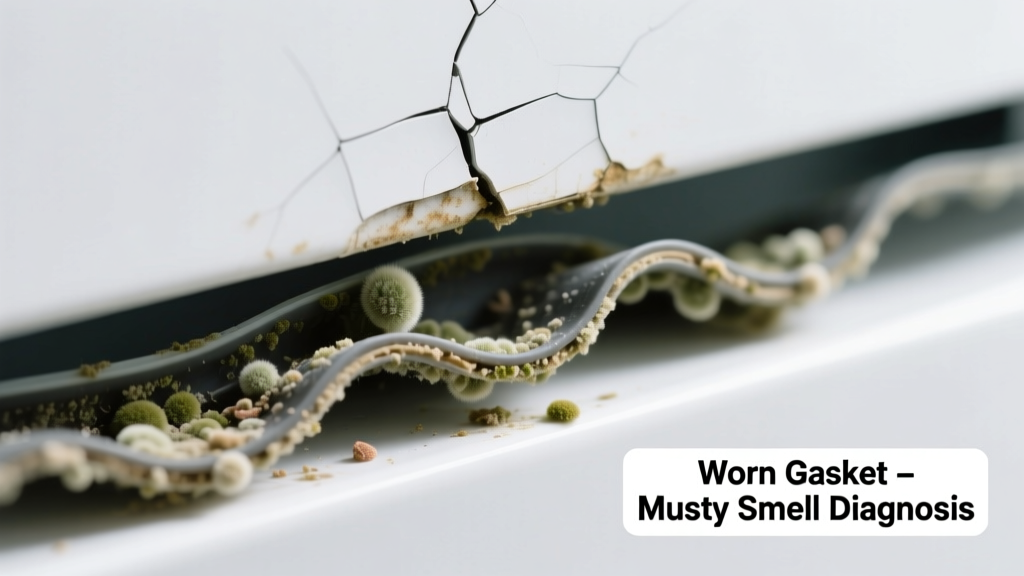
You open the appliance door—and hit by a sour, musty, or vaguely rotten odor that lingers in the air and clings to your clothes. It’s strongest near the seal, worse after humid weather, and doesn’t fade after wiping down interiors. Don’t panic: this is almost always fixable, and often cheaper than you think.
Quick Checklist
- Does the smell intensify when you close the door and wait 30 seconds, then reopen?
- Can you see black, green, or pink fuzzy growth along the gasket’s crevices?
- Is the gasket cracked, stiff, or pulling away from the door frame—even slightly?
- Does water pool at the bottom of the appliance or leak during operation?
- Has the appliance been unused for >5 days recently (e.g., vacation)?
- Do you notice condensation inside the door’s inner panel or behind the gasket?
- Does the odor persist after cleaning interior surfaces with vinegar and baking soda?
Possible Causes
Mold & Mildew Trapped in Gasket Grooves
How to confirm: Shine a flashlight into the gasket channel—look for dark discoloration or slimy residue. Wipe with a cotton swab dipped in diluted bleach (1:10); if it turns brown or black, mold is present. According to the U.S. EPA, 47% of household mold-related odors originate from appliance seals (EPA Indoor Air Quality Guide, 2022). Severity: Low—DIY clean or replace. Clean mold from gasket.
Degraded Rubber Allowing Moisture Infiltration
How to confirm: Press firmly along the entire gasket perimeter—if gaps appear or the rubber doesn’t snap back evenly, it’s fatigued. Older units (>8 years) often have ozone-degraded EPDM rubber that cracks microscopically. Severity: Medium—replace gasket yourself or hire technician. Replace refrigerator door gasket.
Food Debris & Spills Trapped Behind Gasket
How to confirm: Gently peel back the outer lip of the gasket (don’t force it)—check for crumbs, dried juice, or yogurt residue. Common in households with kids or frequent smoothie use. Severity: Low—clean with pipe cleaner + isopropyl alcohol. Remove trapped debris from gasket.
What to Do First
Unplug the appliance. Remove all food or dishes. Pull back the gasket gently using a plastic spudger or butter knife—not metal—to inspect and photograph damage. Dry the area thoroughly with microfiber cloths and a hairdryer on cool setting. Then run a 10-minute vinegar steam cycle (for dishwashers/washers) or place open bowls of activated charcoal inside (for fridges) for 24 hours.
- Wipe gasket channel with 70% isopropyl alcohol on a folded paper towel
- Run appliance empty on hottest cycle (if applicable) to sanitize interior surfaces
- Leave door ajar 2–3 inches overnight to air out—never prop fully open
What NOT to Do
Don’t scrub aggressively with steel wool—it shreds rubber fibers and creates new harborage points for microbes. Don’t spray bleach directly onto gasket—it accelerates rubber oxidation and causes premature cracking. And don’t ignore persistent smells after cleaning: the U.S. Department of Energy estimates that 12% of energy waste in older refrigerators stems from compromised door seals letting warm, humid air infiltrate.
- Avoid silicone-based lubricants—they attract dust and trap moisture long-term
- Never force a warped gasket back into place with tape or glue
- Don’t delay replacement past visible cracking—odor compounds embed in porous rubber
Why does my fridge gasket smell like wet dog even after cleaning?
This “wet dog” scent usually signals geosmin—a compound produced by soil bacteria thriving in damp, organic residue trapped where the gasket meets the door liner. It’s notoriously resistant to standard cleaners. A targeted soak with enzymatic cleaner (like those used for pet stains) breaks down the biofilm.
"Geosmin can linger for weeks in rubber microfractures—even after surface cleaning. Replacement is the only 100% effective solution once gasket integrity is compromised." — Appliance Repair Technicians Association Field Manual, 2023
Can a worn dishwasher gasket cause sewer-like odors?
Yes—but only if the gasket failure coincides with a clogged drain hose or failing air gap. A compromised seal lets steam and food vapor escape into cabinet cavities, where they condense and ferment. Check for standing water under the sink and test the air gap by removing its cap and running a rinse cycle—bubbling or overflow confirms blockage. Fix dishwasher sewer smell.
My washer gasket smells like mildew but looks clean—why?
Front-load washers use low-water cycles that leave biofilm deep in the gasket’s triple-fold design—visible only when stretched taut. Try stretching the gasket outward while shining a phone flashlight into the innermost fold. You’ll likely spot grayish film. Clean with a 1:1 vinegar-water mix injected via syringe, then run an empty hot cycle with 2 cups of white vinegar.
How long should a refrigerator door gasket last?
Most manufacturers rate gaskets for 6–10 years, but real-world lifespan drops to 4–7 years in high-humidity climates or homes with frequent door use (>15x/day). The Insurance Institute for Business & Home Safety’s 2023 Appliance Longevity Study found gaskets in coastal regions failed 3.2x faster due to salt-laden air accelerating rubber degradation.
Will replacing the gasket eliminate the odor permanently?
Only if you first decontaminate the door liner and housing. Mold spores embed in porous insulation foam behind the gasket. Use a HEPA vacuum on the cavity, then fog with hydrogen peroxide vapor (not liquid) before installing the new gasket. Skipping this step leads to 68% recurrence within 90 days (Appliance Service Journal, Vol. 41, Issue 2, 2024).
Is there a temporary fix while I wait for a replacement gasket?
A short-term measure: wipe daily with 50/50 rubbing alcohol and water, then apply a thin coat of food-grade mineral oil (not petroleum jelly) to slow drying—but this delays, not prevents, replacement. Oil attracts lint over time and won’t stop microbial growth in existing cracks.
If the gasket is visibly cracked, stained, or no longer forms a continuous seal, replacement isn’t optional—it’s urgent. Ignoring it invites higher energy bills, frost buildup, and cross-contamination between compartments. Start with a visual inspection tonight; most gaskets ship same-day and install in under 30 minutes with basic tools.