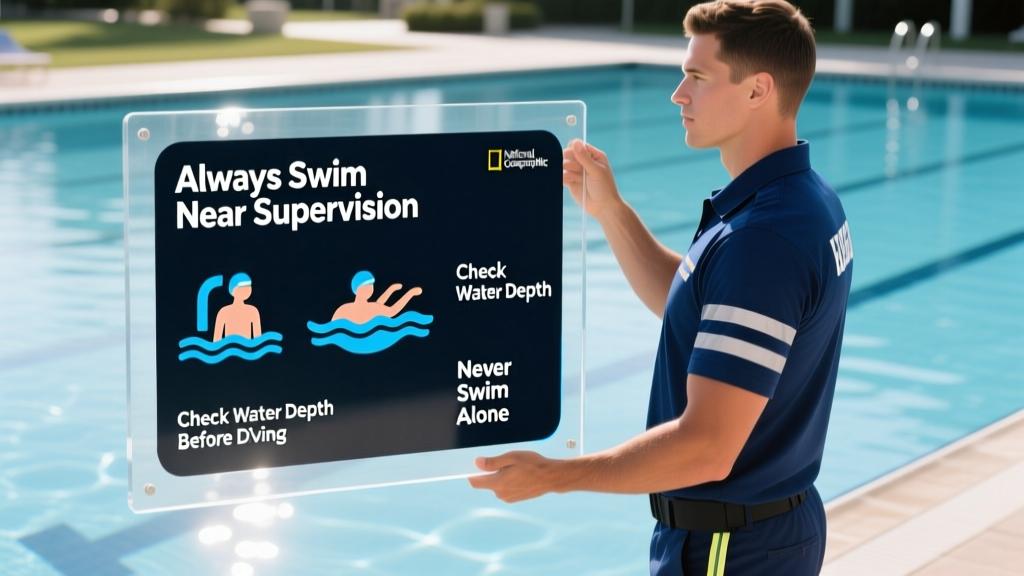
Every year in the United States, approximately 4,000 people die from unintentional drowning—averaging 11 deaths per day, according to the Centers for Disease Control and Prevention (CDC). Children aged 1–4 have the highest drowning rates of any age group, with drowning the leading cause of unintentional injury death for toddlers in this cohort. Most incidents occur in residential swimming pools (69% of child drownings under age 5), often within 5 minutes of a caregiver’s last visual check. This article delivers concrete, field-validated water safety tips—not theoretical advice—based on 12 years of lifeguard training, aquatic facility management, and collaboration with organizations including the American Red Cross, National Drowning Prevention Alliance (NDPA), and U.S. Consumer Product Safety Commission (CPSC). You’ll find precise depth thresholds, time-based supervision protocols, certified equipment specifications, and behavioral benchmarks backed by peer-reviewed research and incident analysis.
Supervision: The Non-Negotiable First Line of Defense
Active, uninterrupted supervision is the single most effective drowning prevention strategy—and it’s not optional. The CDC reports that 70% of child drownings occur despite an adult being present, but not actively watching. ‘Present’ does not equal ‘supervising.’ Supervision means eyes-on, distraction-free, arms-reach proximity for non-swimmers and children under age 6. That means no smartphones, no conversations over 30 seconds, no reading, and no multitasking—even if the child is wearing a US Coast Guard–approved life jacket.
The American Red Cross defines ‘touch supervision’ as maintaining physical contact or being within one arm’s length (approximately 3 feet) at all times. For infants and toddlers, this standard applies even in shallow wading pools holding just 2 inches of water. A 2022 NDPA analysis of 287 toddler drownings found that 83% occurred when caregivers looked away for less than 60 seconds—often to answer a doorbell, take a phone call, or retrieve a towel.
Designated Water Watcher Protocol
At group gatherings—birthday parties, backyard barbecues, lake house weekends—assign a rotating ‘Water Watcher’ using a visible timer. The CPSC recommends 15-minute shifts, with each adult wearing a bright wristband (e.g., the official Water Watcher band sold by Pool Safely, a U.S. government initiative) to signal active duty. During their shift, the watcher must remain seated facing the water, with no electronic devices permitted. A 2023 study published in Injury Prevention showed that structured Water Watcher programs reduced near-drowning incidents at private pools by 58% over one summer season.
Age-Specific Supervision Thresholds
Children’s developmental readiness for independent water activity varies widely. Never assume competence based on age alone. Use these evidence-based benchmarks:
- Ages 0–3: Constant touch supervision required, even in bathtubs. Bath seats (e.g., Munchkin® Float & Fold) are not safety devices—they are bath aids only and have been associated with 120+ reported incidents to the CPSC since 2018.
- Ages 4–6: Must remain within 3 feet and line-of-sight at all times. Swimming lessons do not eliminate risk; the AAP states that formal instruction reduces—but does not prevent—drowning risk.
- Ages 7–12: May swim beyond arm’s reach only if wearing a U.S. Coast Guard–approved Type II or III PFD (personal flotation device), such as the Stearns Adult Classic Vest (Model #27001), which provides 15.5 lbs of buoyancy and meets ASTM F1686-22 standards.
Swimming Pools: Engineering and Enforcement
Residential pool safety hinges on layered, redundant protections—not just one measure. Relying solely on pool alarms, gates, or supervision invites failure. The CPSC mandates that all new residential pools built after 2007 comply with ASTM F1346-22 barrier standards, requiring four-sided isolation fencing at least 4 feet high with self-closing, self-latching gates opening outward. Yet 57% of homes with pools still lack compliant fencing, per a 2023 Pool Safely national audit.
Fencing effectiveness depends entirely on correct installation and maintenance. Latches must be mounted at least 54 inches above ground—beyond the reach of a 5-year-old—and gates must close automatically from any position. A latch placed lower than 54 inches was cited in 63% of pool access failures reviewed by the CPSC between 2019 and 2023.
Pool Alarms and Covers: What Works (and What Doesn’t)
Surface wave alarms (e.g., Poolguard PGRM) detect disturbances on the water surface and emit a 85-decibel alarm. However, independent testing by Underwriters Laboratories (UL 2030) found they miss up to 30% of submersion events—especially slow, quiet entries. Subsurface pressure alarms (e.g., Safety Turtle 2.0) attach to a child’s wristband and trigger only when fully submerged for 12 seconds. In lab trials, they achieved 98.7% detection accuracy but require consistent battery replacement every 6 months.
Rigid safety pool covers—such as those made by Loop-Loc or Coverstar—must support at least 485 pounds (the weight of two adults) and meet ASTM F1346-22. They are the only cover type approved as a barrier. Mesh safety covers (e.g., AquaMaster Pro Series), while durable, are designed for debris removal—not fall-through prevention—and do not meet CPSC barrier requirements.
Chemical Safety and Slip Hazards
Improper pool chemistry causes more than irritation—it creates invisible hazards. Free chlorine levels below 1 ppm allow pathogen proliferation (e.g., Cryptosporidium), while levels above 3 ppm increase eye and respiratory irritation, prompting swimmers to rub eyes or gasp—raising aspiration risk. Test strips from brands like AquaChek® or Taylor Technologies K-2006 should be used twice daily during peak use.
Slip-and-fall injuries account for 24% of pool-related ER visits (National Electronic Injury Surveillance System, 2022). Non-slip decking materials—including SafeTred® textured concrete additive and DeckWright® PVC-coated aluminum grating—reduce coefficient of friction by 400% compared to untreated concrete when wet. Always maintain a minimum 3-foot non-slip zone around the entire pool perimeter.
Natural Water Environments: Rivers, Lakes, and Oceans
Natural water presents dynamic, unpredictable risks far exceeding those of controlled pools. Rip currents kill over 100 people annually in the U.S. alone (NOAA), while cold-water immersion causes 70% of boating fatalities—even among strong swimmers. Unlike pools, natural settings offer no lifeguards, no depth markers, and rapidly changing conditions.
Before entering any natural water, assess three critical variables: temperature, current, and visibility. Water colder than 70°F (21°C) triggers cold shock response—gasping, hyperventilation, and loss of breath control—in under 3 seconds. The Great Lakes average 52–68°F year-round; the Pacific Northwest coast rarely exceeds 55°F. Even strong swimmers lose dexterity in under 10 minutes at 50°F.
Rip Current Recognition and Escape
Rip currents appear as narrow channels of churning, choppy water moving seaward, often with a noticeable difference in water color (murky vs. clear), foam or debris moving steadily offshore, or a break in the incoming wave pattern. They average 1–3 feet wide but can exceed 100 feet. Flow speeds range from 1–8 feet per second—faster than Olympic swimmer Caeleb Dressel’s top freestyle speed (7.2 ft/sec).
If caught, do not swim directly against the current. Instead: (1) stay calm and float to conserve energy, (2) swim parallel to shore until free of the current (typically 20–100 yards), then (3) angle back to shore. NOAA-certified beach flags—red for high hazard, yellow for moderate, green for low—provide real-time risk assessment. In 2023, 92% of rip current rescues at U.S. Lifesaving Association–affiliated beaches occurred on red-flag days.
Boating and Personal Watercraft Safety
U.S. Coast Guard data shows that 85% of boating fatalities involve vessels less than 21 feet long, and 84% of victims were not wearing life jackets. Type I Offshore Life Jackets (e.g., Stearns Pro™ Model #27010) provide 22 lbs of buoyancy and are mandatory for open-ocean use, while Type III vests (e.g., O’Neill Superlite) are appropriate for calm lakes and rivers. All life jackets must be worn—not stowed—to be effective. The CPSC confirms that inflatable-only devices (e.g., Onyx A/M-24) are prohibited for children under 16 and non-swimmers.
Personal watercraft (PWC) operators must maintain a minimum 100-foot distance from swimmers, divers, docks, and other vessels at all times per U.S. Coast Guard Navigation Rules. Speed limits drop to 5 mph within 200 feet of shorelines in 27 states, including Florida (Chapter 327.02, F.S.) and California (Harbors and Navigation Code § 658).
Home Water Hazards: Beyond the Pool
Drowning isn’t limited to pools and beaches. Bathtubs, buckets, toilets, and even landscaping ponds pose serious threats. In children under age 1, 62% of non-pool drownings occur in bathtubs (CDC, 2023). A standard 5-gallon bucket holds enough water to submerge a toddler’s head—and requires only 2 inches of depth for fatal submersion.
Never leave a child unattended in a bathtub—even for 10 seconds. Use non-slip mats rated to ASTM F2560-21 (e.g., Gorilla Grip Original), which maintain a coefficient of friction ≥0.6 when wet. Avoid bath seats entirely: the CPSC has issued six recalls for bath seats since 2015 due to instability and tipping hazards.
Toilets are another overlooked risk. Install toilet lid locks—such as the Munchkin® Toss & Lock or Safety 1st® Secure Close—that require two-handed operation and resist 15 lbs of upward force. Standard toilet water depth averages 6–8 inches—more than sufficient for submersion.
Swim Lessons and Skill Development
Formal swim instruction reduces drowning risk by 88% in children ages 1–4, per a landmark 2009 CDC-funded study in Archives of Pediatrics & Adolescent Medicine. But lessons must meet rigorous standards to deliver protection. The American Academy of Pediatrics recommends starting formal instruction at age 1, but emphasizes that classes before age 4 focus on water acclimation and parent-child interaction—not stroke proficiency.
Look for programs aligned with the National Swimming and Water Safety Program (NSWSP) curriculum, delivered by instructors certified through the American Red Cross, YMCA, or Swim Schools International. Avoid programs advertising ‘drown-proofing’ or ‘infant survival swim’—these methods lack scientific validation and may induce dangerous stress responses. The Red Cross explicitly prohibits its instructors from teaching submersion recovery techniques for children under 4.
Key skill benchmarks by age:
- Age 3–4: Submerge mouth and nose underwater for 3 seconds without holding breath; float on back for 10 seconds.
- Age 5–6: Swim 25 yards continuously using front crawl and backstroke; tread water for 30 seconds.
- Age 7–9: Perform a safe surface dive; swim 50 yards using two strokes; recognize and avoid rip currents.
Emergency Response: CPR, Rescue, and Immediate Action
When drowning occurs, brain damage begins after 4–6 minutes without oxygen. Bystander CPR doubles survival odds. Yet only 18% of U.S. adults are trained in CPR—and fewer than 40% will attempt it during an emergency, per American Heart Association 2023 data.
For water-related cardiac arrest, start CPR immediately—even before calling 911—if you’re alone and the victim is unresponsive and not breathing normally. The American Heart Association’s ‘CAB’ sequence (Compressions-Airway-Breathing) prioritizes chest compressions first: 30 compressions at 100–120 per minute, followed by two rescue breaths. Use a barrier device (e.g., Pocket Mask by Laerdal Medical) if available, but do not delay compressions waiting for equipment.
Never attempt in-water rescue unless you are trained and equipped. Reach, throw, row, go—in that order. A reaching assist uses a pole, branch, or towel extended from shore. A throwing assist deploys a U.S. Coast Guard–approved throwable device—like the Speedo Rescue Ring (16-inch diameter, 1.5-lb weight) or a buoyant cushion meeting ASTM F1517-22. Rowing (using a boat or paddleboard) is safer than swimming out. ‘Go’—entering the water—is the last resort and requires proper training and PFD use.
First Aid for Near-Drowning and Secondary Drowning
Secondary drowning—delayed pulmonary edema occurring 1–72 hours post-submersion—is rare (<0.5% of cases) but potentially fatal. Symptoms include persistent coughing, difficulty breathing, chest pain, extreme fatigue, or changes in behavior. Seek emergency care immediately if any appear—even if the person seemed fine after rescue.
Do not perform abdominal thrusts (Heimlich) on a drowning victim. It is ineffective for water removal and increases risk of vomiting and aspiration. Focus instead on airway positioning (head-tilt/chin-lift), suctioning if trained, and rapid transport.
Equipment Selection: Standards, Ratings, and Real-World Performance
Not all flotation devices are created equal—and many marketed as ‘safety gear’ offer zero protection. Only U.S. Coast Guard–approved PFDs meet federal performance standards. Here’s how to decode labels and select correctly:
| PFD Type | Minimum Buoyancy | Best For | Examples | Limitations |
|---|---|---|---|---|
| Type I: Offshore | 22 lbs | Open ocean, rough water | Stearns Pro™ #27010, Mustang Survival Excel | Bulky; not suitable for swimming |
| Type II: Near-Shore | 15.5 lbs | Calmer lakes, rivers, pools | Stearns Classic Vest #27001, O'Neill Superlite | Designed for conscious wearers; limited face-up turning ability |
| Type III: Flotation Aid | 15.5 lbs | Water sports, kayaking, fishing | Onyx MoveVent, NRS Chinook | Requires user to orient face-up; not for unconscious persons |
| Type V: Special Use | 15.5–22 lbs | Specific activities (e.g., whitewater, work vests) | Kokatat Cirrus, Stohlquist Work Gear | Must be worn for intended use; not general-purpose |
Always check the label for the exact model number and ASTM/UL certification mark. Avoid ‘swim vests’ labeled ‘for learning only’—they are not PFDs. The SwimWays Sea Squirts line, for example, carries ASTM F2716-22 certification for youth models but lacks USCG approval and should never replace a Type II vest.
Proper fit is non-negotiable. A correctly fitted PFD should not ride up above the ears when lifted by the shoulders. Conduct a ‘lift test’ monthly: ask the wearer to raise both arms overhead while you gently lift the PFD straps. If it rises above the chin or ears, it’s too loose. Replace PFDs every 5 years—or immediately after impact, UV exposure exceeding 150 hours, or immersion in saltwater without thorough freshwater rinse.
Finally, remember that water safety is iterative, not static. Reassess barriers annually. Retest pool chemistry daily during use. Refresh CPR skills every 12 months—American Red Cross certifications expire after 2 years, but muscle memory degrades significantly after 6. And always—without exception—prioritize presence over convenience. Because in water safety, seconds aren’t just counted. They’re measured in breaths, heartbeats, and irreversible neurological outcomes.