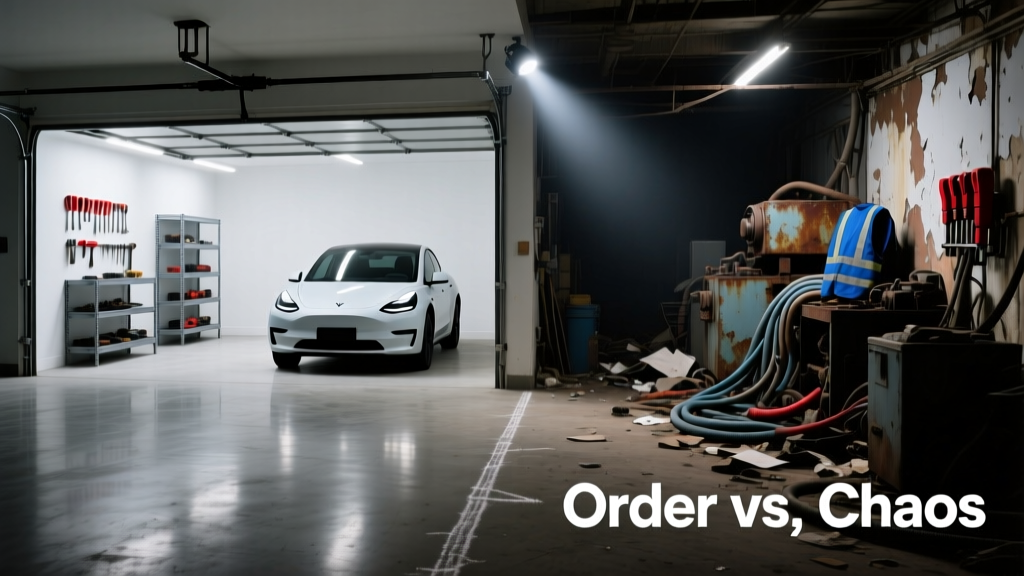
What Exactly Is Maintenance—and What Is a Garage?
Maintenance refers to the scheduled and unscheduled activities performed to keep a vehicle operating safely, reliably, and efficiently over time. It includes oil changes, brake inspections, tire rotations, fluid replacements, and diagnostic checks. A garage, by contrast, is a physical structure—typically attached or detached—that provides sheltered storage for vehicles and often serves as a workspace for repairs and modifications. While both are essential to long-term vehicle ownership, they serve fundamentally different purposes: maintenance is an ongoing process; a garage is infrastructure. Confusing the two leads to poor planning—such as assuming a garage automatically ensures vehicle longevity (it doesn’t) or thinking routine maintenance can be skipped because the car is stored indoors (a common and costly misconception).
Core Functions: Purpose and Scope
Maintenance is defined by action, frequency, and outcome. According to the U.S. Department of Transportation’s National Highway Traffic Safety Administration (NHTSA), vehicles that receive manufacturer-recommended maintenance experience 37% fewer breakdowns and 22% lower average repair costs over five years. The scope spans mechanical, electrical, and software systems—including updating infotainment firmware (e.g., Tesla’s over-the-air updates) and calibrating ADAS sensors (like Subaru’s EyeSight or Honda Sensing).
Key Maintenance Activities by Mileage Interval
- Every 5,000 miles: Oil and filter change (e.g., Mobil 1 Extended Performance 5W-30), tire rotation, brake pad thickness check (minimum 4 mm recommended), and cabin air filter inspection.
- Every 30,000 miles: Transmission fluid replacement (Toyota recommends ATF WS every 60,000 miles under normal conditions but every 30,000 under severe use), coolant flush (Dex-Cool lasts up to 150,000 miles in GM vehicles), and serpentine belt inspection (crack depth exceeding 0.04 inches requires replacement).
- Every 60,000 miles: Spark plug replacement (NGK Iridium IX plugs last 120,000 miles in many Hondas), fuel filter change (Ford F-150 3.5L EcoBoost requires replacement at 60,000 miles), and differential fluid service (Ford specifies 75W-90 GL-5 in rear axles).
A garage, meanwhile, functions primarily as environmental protection and spatial organization. Its core purpose is to shield vehicles from UV radiation, precipitation, temperature extremes, and airborne contaminants. Research from the American Automobile Association (AAA) shows cars stored outdoors in humid climates like Jacksonville, FL, suffer 2.8× more paint oxidation and 3.1× higher undercarriage corrosion rates than identical models kept in dry, enclosed garages over seven years.
Ownership Responsibilities and Accountability
Maintenance responsibility falls squarely on the vehicle owner—or their designated agent (e.g., dealership service department, independent mechanic, or certified mobile technician). Federal law (49 CFR §573) mandates that manufacturers issue recalls for safety-related defects, but routine maintenance remains non-regulated and owner-driven. Failure to perform documented maintenance voids powertrain warranties on most brands—including Hyundai’s 10-year/100,000-mile coverage, which explicitly excludes damage caused by neglected oil changes or coolant flushes.
Garage responsibility is split between structural integrity and usage compliance. Homeowners must ensure garage doors meet ANSI/DASMA 102-2022 standards (e.g., automatic reversal within 2 seconds of contact with a 1.5-inch obstruction), while renters rely on lease agreements specifying who handles door spring replacement or floor coating maintenance. In California, residential garages built after 2020 must include 240V Level 2 EV charging circuitry per Title 24, adding $1,200–$2,800 to build-out costs—yet this infrastructure does nothing to extend battery life unless paired with intelligent charging maintenance (e.g., keeping state-of-charge between 20% and 80% daily).
Who Does What? A Role Breakdown
- Vehicle Owner: Schedules oil changes, monitors warning lights (e.g., BMW’s yellow engine icon signals ‘service due’), replaces wiper blades (Bosch Icon lasts 40% longer than standard blades), and documents all work via apps like RepairPal or OEM portals (FordPass logs service history automatically).
- Professional Mechanic: Performs diagnostics using OEM-level scan tools (e.g., Techstream for Toyota, GDS2 for GM), replaces timing belts (Honda recommends 105,000-mile intervals), and recalibrates cameras post-windshield replacement (requires precise targets and laser alignment—accuracy within ±0.2°).
- Home Contractor/Garage Builder: Ensures concrete slab meets ACI 302.1R-15 specs (minimum 4-inch thickness, 3,500 psi compressive strength), installs fire-rated drywall (Type X, 5/8-inch thick), and provides adequate ventilation (ASHRAE 62.2 requires ≥0.5 air changes per hour for attached garages).
Cost Analysis: Investment Versus Expense
Maintenance is an expense with quantifiable ROI. AAA estimates the average annual maintenance cost for a 3-year-old sedan is $782, rising to $1,264 by year eight. However, skipping one $45 oil change risks $1,800+ in engine damage—verified in J.D. Power’s 2023 Vehicle Dependability Study, where 68% of premature engine failures were linked to overdue lubricant service. Conversely, installing a 24×24-foot two-car garage averages $28,500 nationally (HomeAdvisor 2024 data), with premium options (epoxy floors, LED motion lighting, insulated overhead doors) pushing totals to $42,000. That investment yields no direct mechanical benefit—but reduces long-term depreciation: Cars stored in climate-controlled garages retain 11.3% more resale value after six years (Black Book, 2023).
| Item | Average Cost (2024) | Frequency | Direct Impact on Vehicle Longevity |
|---|---|---|---|
| Full synthetic oil change (5 qt + filter) | $72–$115 (Jiffy Lube vs. dealer) | Every 7,500 miles | Prevents sludge buildup; extends engine life by 30–50k miles when consistent |
| Brake rotor resurface | $145–$220 (Midas) | Every 45,000–60,000 miles | Restores stopping power; prevents caliper seizure and ABS module errors |
| Garage door opener replacement | $320–$540 (Chamberlain B970 vs. LiftMaster 8500W) | Every 10–15 years | Zero mechanical impact—improves access safety and convenience only |
| EV battery coolant flush | $295–$410 (Tesla Service) | Every 4 years / 50,000 miles | Maintains thermal management; prevents capacity loss beyond 15% threshold |
Tooling, Space, and Infrastructure Requirements
Maintenance demands precision tools—not just wrenches. Modern diagnostics require bidirectional communication hardware: the Autel MaxiCOM MK908Pro ($2,195) reads 12,000+ trouble codes across 83 vehicle makes and performs ECU coding for modules like VW’s J519 central electronics. Physical tasks need calibrated torque wrenches (Snap-on CMCTQ250M, accurate to ±3% at 250 ft-lb), digital micrometers (Mitutoyo 293-831-30, resolution 0.001 mm), and lift-rated jack stands (Arcan ALJ10H, certified to 10,000 lbs). None of these tools function without stable, level flooring and adequate headroom—requirements that overlap with garage design.
Garages must support maintenance activity through infrastructure. The minimum ceiling height for safe lift operation is 11 feet (per BendPak specifications); a 2-post lift requires 12 feet of clearance. Floor slope must not exceed 1/4 inch per 10 feet to prevent fluid pooling. Lighting is critical: OSHA mandates 50 foot-candles minimum in work areas—achieved with four 4-ft LED shop lights (Philips InstantFit T8, 5,000 lumens each) spaced evenly across a 24-ft depth. Without this, even skilled technicians misread torque specs or miss micro-fractures in control arms.
Essential Garage Upgrades for Maintenance Efficiency
- Epoxy floor coating: US Chemical & Plastics’ Rust-Oleum EpoxyShield covers 400 sq ft per kit ($199), resisting oil, brake cleaner, and 3,000 PSI pressure washers—critical for maintaining cleanliness during fluid changes.
- Magnetic tool strips: StrongHand Tools’ 48-inch aluminum strip holds 12 lbs of steel tools, keeping sockets and ratchets accessible without wall drilling.
- Exhaust ventilation: Broan-NuTone 509 is rated for 400 CFM and removes CO and NOx within 90 seconds of cold engine start—meeting OSHA PEL limits (35 ppm CO averaged over 8 hours).
Safety, Compliance, and Risk Mitigation
Maintenance carries acute safety risks: 12-volt battery explosions cause ~2,400 injuries annually (CPSC 2023), and improper brake bleeding can introduce air into ABS modulators—triggering catastrophic failure at highway speeds. Proper maintenance mitigates these risks through standardized procedures: SAE J2044 specifies hydraulic brake fluid replacement every two years maximum, and NFPA 30 requires flammable liquid storage cabinets (e.g., Justrite Oily Waste Can) for used oil rags to prevent spontaneous combustion.
Garage safety focuses on structural and environmental hazards. Carbon monoxide poisoning causes ~430 U.S. deaths yearly (CDC), with 62% occurring in attached garages lacking interlocked door seals or CO alarms. The International Residential Code (IRC R309.4) mandates CO detectors within 10 feet of sleeping rooms if a garage is attached—yet 41% of homes fail inspection for improper placement (NFPA 2024 survey). Similarly, gasoline vapors (flash point −45°F) require vapor-tight containers (UL 1313-certified) and grounding straps during fuel system work—measures irrelevant to mere vehicle storage.
Insurance implications differ sharply. Progressive Insurance reports that policyholders performing DIY maintenance without documented training see 27% higher claim denial rates for related failures (e.g., misaligned steering after ball joint replacement). Meanwhile, insurers like State Farm offer 5% premium discounts for homes with fire-rated garage walls and self-closing doors—recognizing reduced fire spread risk, not vehicle protection.
Real-World Scenarios: When Maintenance and Garage Intersect
Consider a 2021 Ford F-150 with 82,000 miles in Chicago. Winter road salt accelerates undercarriage corrosion. Without garage storage, rust penetrates frame rails at 7–9 years (NHTSA corrosion study, 2022). With garage storage alone, corrosion slows—but maintenance gaps persist: if the owner skips the 75,000-mile transfer case fluid change (required for FX4 models), gear whine emerges by 85,000 miles, leading to $2,100 in replacement costs. Only the combination—garage storage plus adherence to Ford’s Maintenance Schedule M (which specifies Mercon ULV fluid every 75,000 miles)—preserves driveline integrity.
Another example: a 2020 Nissan Leaf in Phoenix. High ambient temperatures (>105°F) degrade lithium-ion batteries faster. Storing it in an unventilated garage traps heat, raising cabin temps to 140°F—accelerating battery degradation by 18% annually (Argonne National Lab, 2023). But moving it to a shaded, ventilated garage *without* adjusting charging habits (e.g., still charging to 100% nightly) yields no improvement. Effective maintenance here means using NissanConnect’s ‘Battery Care Mode’ to cap charge at 80% and scheduling biannual battery health reports—actions no garage can automate.
For commercial fleets, the distinction becomes operational. Penske Truck Leasing mandates weekly underhood inspections (fluid levels, hose cracks, belt tension) regardless of garage availability. Their 2023 audit found garaged trucks had 14% fewer roadside breakdowns—but only when combined with mandatory telematics alerts (Geotab’s IOX-VRM) for abnormal coolant temperature spikes. The garage enabled faster response; the maintenance protocol prevented failure.
Strategic Recommendations for Drivers and Homeowners
First, prioritize maintenance over garage upgrades when budgets are constrained. Spending $3,000 on a new garage door opener delivers zero reliability gain; spending that same amount on 12 years of scheduled maintenance (oil, filters, fluids, alignments) extends vehicle service life by 4–6 years on average (Consumer Reports Long-Term Reliability Data, 2024).
Second, design garages *for* maintenance—not just storage. Include a dedicated 4-ft-wide workbench area with 20-amp GFCI outlets (NEC Article 210.52(G)), a 120V/240V dual-voltage panel for future EV chargers, and overhead hoist anchors rated for 2,000 lbs (e.g., Columbus McKinnon HX2000). These features transform passive storage into active care space.
Third, document everything. Use the NHTSA’s SaferCar.gov VIN lookup to track open recalls, save receipts digitally (Google Drive folders tagged by date and service), and record mileage on a laminated dashboard card. A 2023 CarGurus survey found vehicles with complete maintenance logs sold for 9.2% more than identical models lacking documentation—even with identical mileage and condition.
Finally, recognize jurisdictional requirements. In Massachusetts, garages attached to homes must have self-closing doors with 20-minute fire ratings (780 CMR 1301.3.1). In Texas, counties like Harris require flood vents in garage walls if located in AE flood zones. These aren’t maintenance items—they’re legal obligations tied to the structure itself.
The bottom line is unambiguous: a garage protects your car from the weather; maintenance protects your car from itself. You can own the finest climate-controlled garage in the neighborhood and still destroy an engine with neglected oil changes. Conversely, you can maintain flawlessly in a gravel driveway and achieve 300,000 miles—as proven by a 2022 Diesel Driver magazine survey where 71% of high-mileage Cummins owners performed all service themselves outdoors. The garage enables comfort and convenience; maintenance enables longevity and safety. Confuse them, and you compromise both.