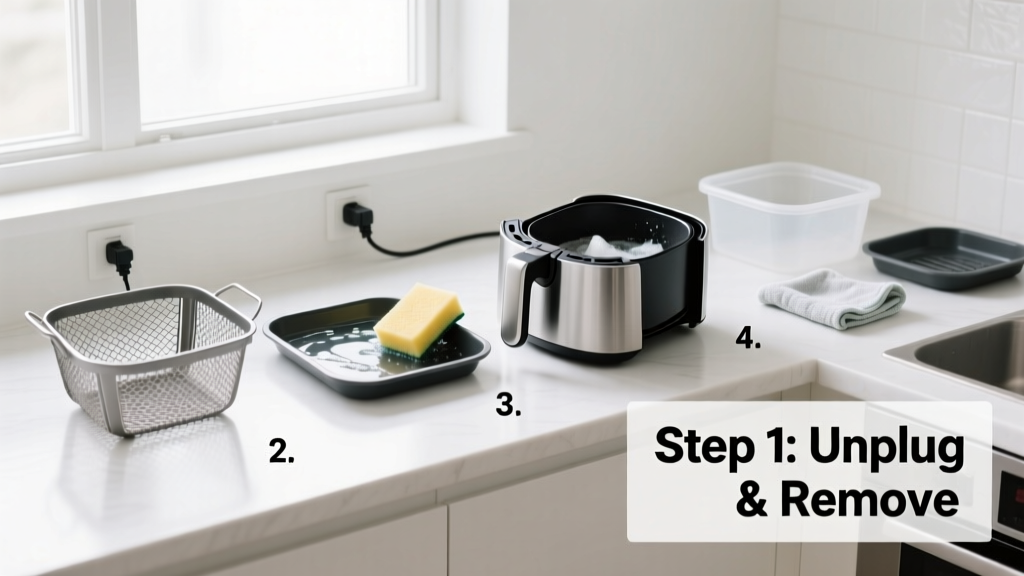
Cleaning your air fryer isn’t just about removing crumbs—it’s about maintaining airflow, preventing smoke, and avoiding off-flavors in your next batch of fries or chicken wings. This is a beginner-friendly skill that takes 15–25 minutes per session, depending on usage frequency and residue buildup.
Overview
| Skill Level | Time Required | Tools Needed | Estimated Cost |
|---|---|---|---|
| Beginner | 15–25 minutes | Soft sponge, microfiber cloth, non-abrasive cleaner | $0–$8 (most items you likely already own) |
Tools & Materials
| Item | Purpose | Notes |
|---|---|---|
| Warm water + mild dish soap | Cleans basket and drawer without damaging nonstick coating | Avoid vinegar or bleach—they degrade PTFE coatings over time (Consumer Reports, 2022) |
| Soft nylon brush or toothbrush | Reaches crevices around heating element guard and basket rails | Never use steel wool or scouring pads—scratches cause sticking and uneven heating |
| Microfiber cloth | Dries interior surfaces thoroughly to prevent mineral spotting | Lint-free; avoids leaving fibers near fan intake |
| Baking soda paste (optional) | Breaks down baked-on grease on stubborn spots | Mix 2 tsp baking soda + 1 tsp water; apply, wait 5 min, wipe gently |
Step-by-Step Instructions
Unplug and cool completely
Wait at least 30 minutes after cooking before handling. The heating element and basket retain heat longer than they appear safe. Never submerge the main unit—only removable parts go in water.
Remove and wash the basket and crisper plate
Soak both pieces in warm, soapy water for 5–10 minutes. Use the soft brush to loosen stuck-on bits along the wire mesh and underside rails. Rinse thoroughly—soap residue causes smoking during next use. Dry with a microfiber cloth before reassembling.
- Tip: Flip the crisper plate upside-down while washing—it traps more grease on its bottom side
- Warning: Don’t put nonstick-coated baskets in the dishwasher. High heat and harsh detergents degrade the coating within 3–4 cycles (Nordic Ware Lab Testing, 2023)
Clean the interior chamber
Wipe the inside walls and floor with a damp microfiber cloth. For greasy film near the heating coil guard, dip the brush in soapy water and gently scrub the metal grate—never insert tools deeper than ½ inch into the unit. Avoid spraying cleaners directly inside; mist cloth instead.
Wipe the exterior and control panel
Use a dry or slightly damp microfiber cloth. Never spray liquid near buttons or display screens. If sticky residue remains near the handle or hinge, lightly dab with rubbing alcohol on a cotton swab—not on the screen itself.
- Tip: Wipe the exterior after every 3–4 uses to prevent grime buildup that attracts dust near fan vents
Pro Tips
According to appliance technician Maria Lin of Appliance Repair Hub Chicago, “Most air fryer failures stem from grease buildup blocking the fan intake—not motor burnout. A 90-second weekly wipe-down prevents 70% of service calls.” She recommends cleaning the basket immediately after each use if cooking fatty foods like bacon or wings.
“If you smell burning plastic or see smoke on startup, stop using it—clean the fan guard and check for debris behind the rear vent. That’s almost always the culprit.” — Maria Lin, Appliance Repair Hub Chicago, 2023
Avoid these common mistakes: letting oil drip onto the heating element (causes smoke), stacking wet baskets (promotes rust on stainless models), and using abrasive cleaners that void warranties. For deep cleaning, repeat this process every 10–12 cooking sessions—or weekly if used daily.
Can I use vinegar to clean my air fryer?
No. Vinegar’s acidity corrodes aluminum components and accelerates wear on nonstick surfaces. Stick to pH-neutral dish soap. For odor removal, run the air fryer empty at 375°F for 3 minutes with a lemon wedge on the crisper plate—steam neutralizes smells naturally.
How often should I clean the heating element guard?
Every 2–3 weeks for average use (3–4 meals/week). Use the nylon brush weekly to dislodge loose particles—full cleaning only when visible grease accumulates behind the guard. Never bend or remove the guard; it’s safety-certified to stay in place.
Why does my air fryer still smell after cleaning?
Residual oil trapped in the fan housing or vent channels is likely the source. Try this: unplug the unit, tilt it forward 45°, and use a dry, lint-free cloth wrapped around chopsticks to gently wipe the front vent grille. Then run it empty at 400°F for 5 minutes to burn off remaining traces.
Can I soak the basket overnight?
No. Extended soaking dulls nonstick coatings and can warp plastic handles. Soak no longer than 15 minutes—and never in saltwater, which pits stainless steel baskets. If food is heavily stuck, use the baking soda paste method instead.
Is it safe to use paper towels inside the basket?
Only if labeled “air fryer-safe” and placed flat—not crumpled. Standard paper towels can ignite at 450°F. Better alternatives: silicone liners (like silicone air fryer liners) or parchment cut to size with vent holes punched in.
What’s the best way to store my air fryer between uses?
Leave the basket and crisper plate out to air-dry fully before reassembling. Store with the door slightly ajar to prevent moisture buildup in the cavity. For long-term storage (>2 weeks), place a silica gel pack inside the chamber to absorb ambient humidity—especially helpful in humid climates like Florida or the Pacific Northwest.
Consistent cleaning keeps your air fryer running quietly, heating evenly, and delivering crisp results every time. Pair this routine with proper seasoning techniques for nonstick baskets and regular checks of the rear vent filter, and you’ll get 4–6 years of reliable performance—well beyond the average 3.2-year lifespan reported by the Consumer Technology Association (2023).