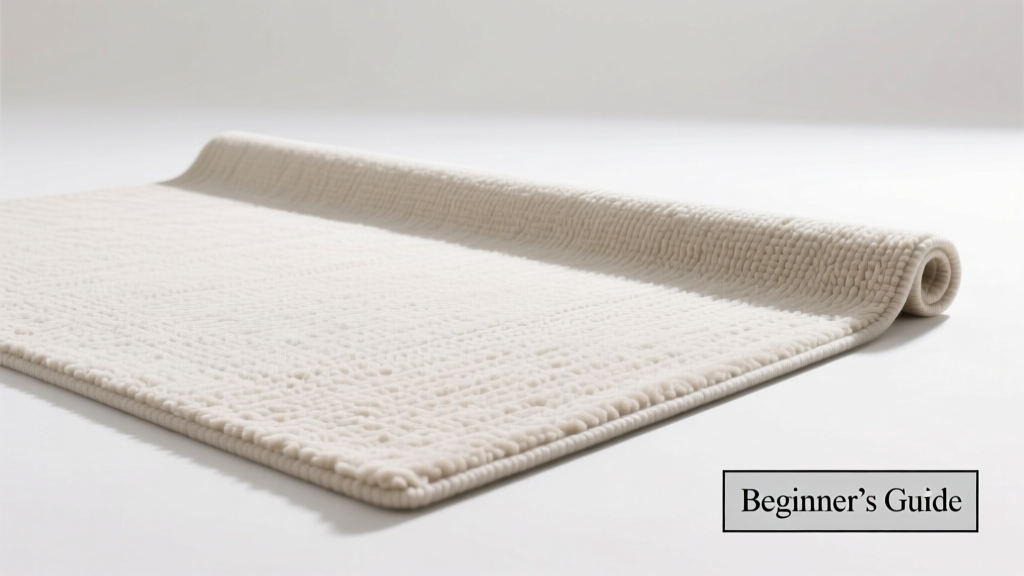
Choosing carpet for the first time can feel overwhelming — especially with dozens of fibers, constructions, and technical terms like 'face weight' and 'tuft twist.' This guide cuts through the noise. You’ll learn exactly how to assess durability for high-traffic areas (e.g., nylon Berber at 40 oz/yd² face weight), why 7/16-inch rebond padding is optimal under most residential carpets, and how to spot a quality cut-pile versus a budget frieze. We cover real-world brands (Shaw, Mohawk, Interface), measurable standards (ASTM D5511 for stain resistance), and common pitfalls — like installing plush carpet in basements where moisture vapor transmission exceeds 3 lbs/1,000 ft²/24 hrs. No fluff. Just facts you can use before your next flooring appointment.
Why Carpet Still Makes Sense in 2024
Despite trends favoring hardwood and luxury vinyl, carpet remains a top choice for comfort, sound absorption, and safety — particularly in bedrooms, stairs, and homes with young children or aging adults. According to the Carpet and Rug Institute (CRI), carpet reduces impact noise by up to 75% compared to hard surfaces. It also improves indoor air quality when vacuumed regularly with a CRI-approved vacuum (e.g., Miele Complete C3 Calima or Dyson V15 Detect), as its fibers trap airborne particulates like dust mites and pet dander. Unlike laminate or tile, carpet provides natural thermal insulation — R-values range from 1.5 to 2.5 depending on fiber and padding combination — which can reduce heating costs by 5–10% in well-insulated homes.
But carpet isn’t universal. It’s poorly suited for unconditioned spaces like garages, sunrooms without climate control, or crawlspaces with relative humidity above 65%. The 2023 NAHB Residential Construction Survey found that 68% of new single-family homes still include carpet in at least one bedroom — proving its enduring practicality when selected and maintained correctly.
Understanding Carpet Construction: What’s Under the Surface
Carpet isn’t just fabric — it’s an engineered system composed of three primary layers: the pile (visible surface), the primary backing (woven substrate holding tufts), and the secondary backing (reinforcing layer laminated underneath). Most residential carpets use polypropylene or polyester primary backings bonded with acrylic latex adhesive. The secondary backing is typically woven polypropylene or non-woven fiberglass-reinforced material — critical for dimensional stability.
Fiber Types: Performance, Not Just Feel
Fiber determines durability, stain resistance, static control, and cost. Here’s how the top five compare using real-world metrics:
- Nylon (e.g., Shaw’s Anso® Nylon 6,6): Highest resilience (retains >90% height after 10,000 cycles per ASTM D3512); excellent abrasion resistance; accepts solution-dyeing for fade resistance. Face weight range: 35–80 oz/yd². Price: $2.99–$8.49/sq ft.
- Polyester (e.g., Mohawk’s SmartStrand®): Superior built-in stain resistance (no topical treatments needed); soft hand; lower resilience (70–75% height retention after testing); prone to matting in high-traffic zones. Face weight: 40–65 oz/yd². Price: $2.29–$5.99/sq ft.
- Polypropylene (Olefin): 100% moisture-proof; ideal for basements and outdoor rugs; zero dye sites = colorfastness; but low crush resistance (fails ASTM D1776 compression test after ~3,000 cycles). Used almost exclusively in loop pile (Berber) styles. Price: $1.49–$3.29/sq ft.
- Wool: Natural flame resistance (LOI = 25.2% vs. nylon’s 20.1%); biodegradable; excellent soil-hiding ability. Requires professional cleaning every 18 months. Price: $8.99–$22.99/sq ft.
- Triexta (e.g., Invista’s Revron®): Hybrid polymer with polyester-like stain resistance and nylon-like resilience; emerging standard in mid-tier residential lines. Face weight: 45–70 oz/yd². Price: $3.49–$6.79/sq ft.
Always verify fiber content via the CRI’s Green Label Plus certification — it confirms VOC emissions are below 0.05 ppm, critical for asthma-sensitive households.
Pile Styles and Their Real-World Uses
Pile refers to the visible surface formed by yarn loops or cut ends. Style affects appearance, footfeel, and performance — not just aesthetics.
Cut Pile: Plush, Saxony, and Frieze
Plush features tightly packed, level-cut fibers (typically 0.25–0.375 inches tall). It delivers luxurious softness but shows footprints and vacuum marks easily — best reserved for low-traffic bedrooms. Shaw’s “Caress” collection uses 100% Anso Nylon with 55 oz/yd² face weight and 6.5 twist per inch (TPI) for enhanced recovery.
Saxony has twisted, slightly textured cut piles (0.375–0.5 inches). Its gentle twist hides traffic patterns better than plush. Mohawk’s “Chateau” line uses 60 oz/yd² Triexta with 8.2 TPI — ideal for living rooms with moderate activity.
Frieze features highly twisted, curled yarns (0.5–0.75 inches). The kinks prevent matting — making it durable for hallways and family rooms. Interface’s “Standing Stone” frieze achieves 7.8 TPI and 68 oz/yd² face weight, with a density rating of 2,800 tufts per square inch (measured per ASTM D5752).
Loop Pile: Berber and Level Loop
Berber traditionally used large, uncut loops of olefin or nylon (0.25–0.375 inches), but modern versions often blend nylon with solution-dyed polyester for improved resilience. Avoid true olefin Berber in direct sunlight — UV exposure causes rapid fibrillation (fuzzing). Shaw’s “Basics” Berber uses 100% nylon with 42 oz/yd² face weight and loop height consistency within ±0.03 inches (per CRI 105 specification).
Level loop features uniform, uncut loops (0.25–0.5 inches) — extremely durable and easy to clean. Used heavily in commercial settings (e.g., hospitals), but increasingly popular in mudrooms. Mohawk’s “Luna” line offers 52 oz/yd² nylon level loop with a density of 3,100 tufts/in².
Tip: For stairs, avoid shag or long-loop styles — they snag on shoe treads. Instead, choose a dense cut pile (≥60 oz/yd²) or level loop with a maximum pile height of 0.375 inches.
Decoding Carpet Labels: Measurements That Matter
Carpet labels list critical specs — but only if you know how to read them. Here’s what’s mandatory (per FTC guidelines) and what’s optional but essential:
- Face weight: Ounces of fiber per square yard (not including backing). Minimum for residential durability: 35 oz/yd². Premium: ≥55 oz/yd². Note: Higher isn’t always better — excessive face weight without density causes premature crushing.
- Twist per inch (TPI): Number of rotations in one inch of yarn. ≥6.0 TPI indicates good resilience. Shaw requires ≥6.5 TPI for warranty coverage on cut-pile residential lines.
- Density: Tufts per square inch × pile height (in inches). Calculated as (tufts/in²) × (pile height). Example: 2,500 tufts/in² × 0.5″ = 1,250. Higher density = less visible backing and better wear resistance. Target ≥1,500 for active households.
- Pile height: Measured from backing to tip in inches. Low (≤0.25″) = resilient but stiff. Medium (0.25–0.5″) = balanced. High (>0.5″) = soft but prone to tracking.
- Backing type: Look for ‘Action Back’ (woven polypropylene) or ‘Helix’ (fiberglass-reinforced) — both resist stretching during power stretching installation.
| Specification | Minimum for Light Use | Recommended for Family Homes | Commercial Grade |
|---|---|---|---|
| Face Weight (oz/yd²) | 30 | 45–65 | 70+ |
| Twist Per Inch (TPI) | 5.0 | 6.5–8.5 | 9.0+ |
| Density Rating | 1,200 | 1,800–2,600 | 3,000+ |
| Pile Height (in) | 0.25 | 0.375–0.5 | 0.25–0.375 |
| Stain Resistance Rating (ASTM D2176) | Pass | Pass + 5-year warranty | Pass + permanent fluorocarbon treatment |
Avoid ‘value’ carpets listing only face weight — without density and TPI, that number is meaningless. For example, a 40 oz/yd² frieze with 4.2 TPI will flatten faster than a 42 oz/yd² saxony with 7.4 TPI.
The Padding Imperative: Why 7/16-Inch Is the Sweet Spot
Padding isn’t optional — it’s 30% of carpet performance. Poor padding causes premature wear, seam separation, and poor acoustics. The CRI recommends minimum 6-pound density for rebond (recycled urethane foam) padding. For most homes, 7/16-inch thick, 6–8 lb/cu ft rebond padding (e.g., Foamex 7/16” or Mohawk’s EcoSoft Plus) delivers optimal support, cushioning, and thermal resistance.
Never use rubber pad under wool — natural latex in rubber degrades wool fibers over time. Likewise, avoid waffle-pad (ribbed rubber) in humid climates — trapped moisture encourages mold between pad and subfloor. In basements, use only moisture-barrier pads like Dream Weaver’s DrySpace (0.25” thick, 8 lb/cu ft, with 0.1 perm rating).
Pro tip: Ask for padding weight per cubic foot — not just thickness. A 1/2-inch pad at 4 lb/cu ft compresses too easily; a 3/8-inch pad at 10 lb/cu ft may be overkill and increase tripping risk at transitions. Stick with 7/16” × 6–8 lb/cu ft for 95% of residential installs.
Installation Methods: Stretching vs. Gluing vs. Tacking
How carpet is secured determines longevity. There are three accepted residential methods:
- Power Stretch (Standard): Carpet is stretched over tackless strips (nails embedded in wood strips) using a knee kicker and power stretcher. Required for all cut-pile and most loop-pile. Ensures no wrinkles or buckling. Industry standard gap: ≤1/8 inch between seams (per CRI 105). Must be done over clean, dry, level subfloor (<3/16” variance over 10 feet).
- Double-Stick (Glue-Down): Adhesive (e.g., Roberts 3060 or Bostik Best) applied to concrete subfloors only. Used for basement rec rooms or slab-on-grade homes. Requires moisture testing: calcium chloride test must show ≤3 lbs/1,000 ft²/24 hrs. Never glue carpet directly to particleboard or OSB — off-gassing and swelling will occur.
- Tackless Strip Only (No Stretch): Used solely for area rugs or temporary installations. Not suitable for wall-to-wall carpet — leads to edge curling and seam failure within 12 months.
Warning: Avoid ‘waterproof’ carpet claims. No carpet is truly waterproof — only moisture-resistant. Even solution-dyed polyester absorbs water at the backing level. If flooding occurs, carpet must be removed within 48 hours to prevent microbial growth (per IICRC S500 standards).
Maintenance That Actually Works: Beyond Weekly Vacuuming
Vacuuming is necessary but insufficient. Realistic care includes three tiers:
Daily/Weekly: The Non-Negotiables
Vacuum high-traffic paths (entryways, hallways) daily with a suction-only or powered roller brush vacuum rated by CRI’s Seal of Approval. Use straight-line passes — overlapping by 50% — at 12–18 inches per second. Replace bags or empty bins at ⅔ capacity to maintain suction. For pet hair, Dyson’s Tangle Tool attachment removes embedded fur without damaging twist.
Quarterly: Spot Treatment Protocol
Treat stains within 5 minutes. Blot — never rub — with undyed cotton cloth. For protein-based stains (urine, dairy), use enzymatic cleaner (e.g., Nature’s Miracle Original). For oil-based (makeup, grease), apply small amount of dish soap (Dawn Ultra) diluted 1:10 with water, then rinse with damp cloth. Always test cleaners in inconspicuous area first — some solvents degrade nylon’s dye sites.
Annually: Professional Deep Cleaning
Hire IICRC-certified firms only. They use hot-water extraction (steam cleaning) at ≥200°F with pH-neutral detergent (pH 6.5–7.5) and extract >95% moisture. Avoid dry-chem or bonnet cleaning for deep soiling — they leave residue that attracts dirt. Shaw warranties require professional cleaning every 18 months to remain valid. Post-cleaning, ensure room humidity stays between 35–55% and airflow is continuous until backing is fully dry (typically 6–10 hours).
Also track wear: Measure pile height annually in four corners and center of each room using a digital caliper. Loss exceeding 0.06 inches/year signals excessive abrasion — consider repositioning furniture or adding walk-off mats.
Finally, replace carpet when backing delaminates (separation between primary and secondary backing), seams gape >1/16 inch consistently, or pile loss exceeds 25% in high-traffic zones — even if it ‘looks fine.’ Most quality residential carpets last 10–15 years with proper care. Shaw’s 15-year limited warranty covers texture retention, stain resistance, and seam ravel — but excludes fading from UV exposure or damage from improper cleaning.
Remember: Carpet is a system — fiber, construction, padding, and installation must work in concert. A $5/sq ft nylon with 65 oz/yd² face weight and 7.2 TPI installed over 7/16” 7 lb/cu ft rebond will outperform a $9/sq ft wool with poor density and thin padding. Prioritize specs over sales pitch. Measure your space twice, check subfloor moisture, and verify installer certifications (CRI’s Certified Installers program). Your feet — and your HVAC bill — will thank you.
One final note: Always request the manufacturer’s full warranty document — not just the sales sheet. Mohawk’s ‘Residential Limited Warranty’ explicitly excludes damage from ‘rolling office chairs without casters rated for carpet,’ while Shaw voids coverage if padding falls below 6 lb/cu ft density. Knowledge isn’t just power — it’s protection.
When evaluating samples, bring them home. View under your actual lighting (incandescent, LED, north-facing window) at noon and dusk. A ‘heathered’ gray that hides dust in daylight may look muddy under warm bulbs. And never skip the burn test for fiber verification — licensed retailers perform this safely using ASTM D1238 melt flow index equipment. If a seller refuses, walk away.
Carpet isn’t outdated — it’s optimized. With precise selection and consistent care, it delivers unmatched comfort, safety, and acoustic performance for years. Focus on the numbers, trust certified professionals, and treat it like the engineered product it is — not just floor covering.