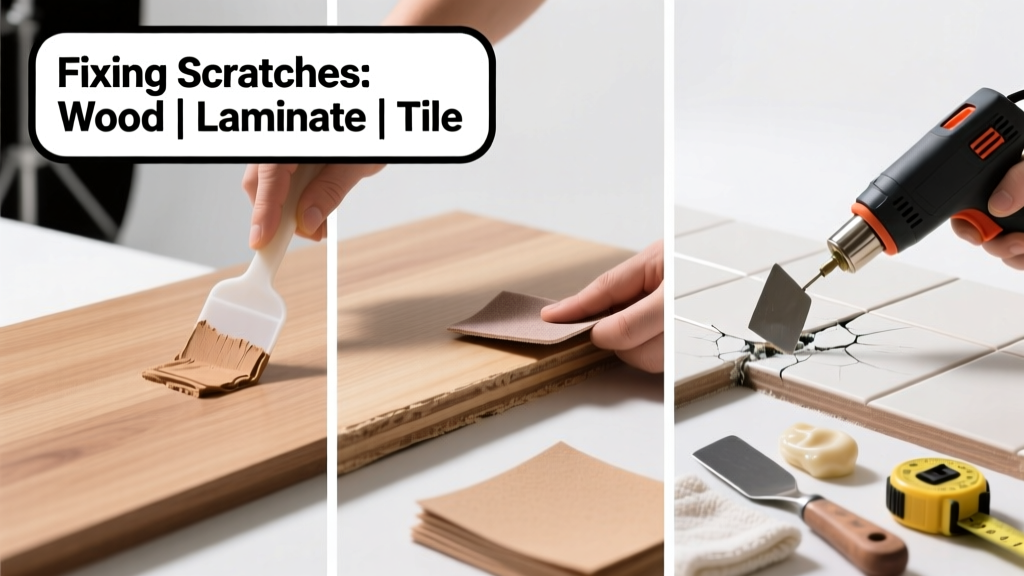
That faint white line across your oak dining table or the hairline gouge in your kitchen laminate countertop? Surface scratches are annoyingly common—and often repairable without replacing the whole thing. Most shallow scratches sit only in the finish, not the substrate, which means you can restore appearance fast with the right technique.
Quick Diagnosis
Before grabbing supplies, identify what’s causing the scratch and how deep it goes. Misdiagnosis leads to wasted effort—or worse, damage.
- Light scuffs from dragging chairs or keys (topcoat only)
- Deeper gouges from dropped cookware or pet claws (through finish into wood or core layer)
- Chemical etching from acidic spills like vinegar or citrus left too long
- Micro-scratches from abrasive cleaners or steel wool pads
- Heat rings mistaken for scratches (often require different treatment)
Tools & Materials Needed
| Item | Purpose | Estimated Cost |
|---|---|---|
| Fine-grit sandpaper (320–600 grit) | Smoother blending of repair compounds and gentle leveling | $4–8 |
| Touch-up marker or wax stick (color-matched) | Fills minor scratches in wood/laminate finishes | $6–12 |
| Mineral spirits or denatured alcohol | Cleans surface before repair; removes residue | $5–9 |
| Microfiber cloths (lint-free) | Prevents new micro-scratches during polishing | $8–15 for pack of 6 |
| Clear acrylic filler or polyurethane topcoat | Seals and protects repaired areas on wood or tile grout lines | $10–18 |
Step-by-Step Fix
Match your method to scratch depth and material. Don’t skip prep—cleaning and drying take 5 minutes but prevent 80% of failed repairs.
- Clean & assess: Wipe area with mineral spirits on a microfiber cloth. Hold a flashlight at a low angle—if light catches no shadow, it’s likely just a finish scratch.
- For light surface scratches (wood/laminate): Apply color-matched wax stick or touch-up marker, let dry 10 minutes, then buff gently with cloth. Repeat if needed.
- For deeper scratches in solid wood: Lightly sand with 400-grit paper *along the grain*, wipe dust, apply matching stain, then seal with clear polyurethane.
- For ceramic tile or grout scratches: Use a grout pen for stained grout lines; for glazed tile, try a baking soda + water paste rubbed gently with soft cloth—never abrasives.
When to Call a Pro
Some scratches signal bigger problems—or demand skills beyond touch-up. Calling early avoids costly escalation.
- Scratches deeper than 1/32 inch in hardwood flooring (risk of splintering or instability)
- Multiple parallel scratches across engineered wood planks (indicates subfloor or installation issue)
- Scratches near plumbing fixtures or electrical outlets where moisture or wiring may be compromised
- Any scratch on structural surfaces like stair treads or load-bearing countertops
"Over 62% of DIY surface scratch repairs fail because users skip cleaning or mismatch color tones—especially on medium-toned woods." — National Wood Flooring Association Repair Standards, 2022
Prevention Tips
Most surface scratches are preventable with simple habits and inexpensive upgrades.
- Use felt pads under all furniture legs—even lightweight stools
- Place cutting boards over countertops before chopping, even on quartz or granite
- Wipe up acidic spills (tomato sauce, lemon juice) within 90 seconds to avoid etching
- Vacuum hardwood floors weekly with a soft-bristle attachment—grit is the #1 cause of micro-scratching
- Avoid rubber-backed rugs on vinyl or laminate—they trap abrasives and off-gas chemicals that dull finishes
Can I use bleach on this?
No—bleach breaks down wood fibers and degrades laminate adhesives. It also yellows white finishes and weakens grout. For disinfecting scratched tile grout, use diluted hydrogen peroxide instead.
Will toothpaste really work?
Only on very light, non-porous surface haze—not actual scratches. Whitening toothpaste contains mild abrasives that can polish minor cloudiness on glass or stainless steel, but it risks dulling matte-finish laminates. Skip it for wood or tile.
How long does a wax stick repair last?
Typically 6–12 months in low-traffic areas like bedroom dressers. In high-use zones (kitchen cabinets, dining tables), reapply every 3–4 months. Avoid placing hot items directly on wax-filled spots—it softens above 120°F.
Can I sand laminate flooring?
Not safely. Laminate has a thin wear layer (0.2–0.5mm); sanding breaches it and exposes the HDF core, which swells with moisture. Stick to fillers and markers—never orbital sanders or steel wool.
What’s the fastest fix for a scratch on my fridge door?
Use a stainless-steel cleaner with built-in polish (like Weiman Stainless Steel Cleaner) and rub *with the grain* using a microfiber cloth. For deeper marks, a dedicated stainless scratch remover kit (e.g., Scratch-B-Gone) works in under 10 minutes.
Does sunlight make scratches worse?
Yes—UV exposure fades surrounding finish, making scratches more visible over time. Keep blinds adjusted during peak sun hours, especially on south-facing cabinets and floors. UV-blocking window film cuts fade by up to 75%, according to the International Window Film Association’s 2023 report.
Fixing a surface scratched doesn’t mean resigning yourself to replacement—or living with eyesores. With the right diagnosis, a few targeted supplies, and attention to detail, most everyday scratches vanish in under 20 minutes. If you’ve tackled similar issues before, check out our guides on fix squeaky floorboard or repair loose kitchen cabinet hinge next.