Why Pest Safety Is a Public Health Priority
Each year, over 1.2 million U.S. households report pesticide-related incidents to poison control centers—nearly 40% involving children under six, according to the American Association of Poison Control Centers (2023 Annual Report). Pest infestations aren’t just nuisances; they pose documented health risks—from asthma exacerbation triggered by cockroach allergens (per NIH/NIAID studies) to hantavirus transmission via deer mouse droppings (CDC reports 25–50 U.S. cases annually). Yet many common pest control practices unintentionally increase household risk. This article delivers actionable, science-backed pest safety tips—covering chemical handling, structural prevention, pet- and child-specific safeguards, and third-party verified alternatives—with precise measurements, brand-tested products, and enforceable building standards.
Safe Pesticide Handling: Dos, Don’ts, and Dilution Science
Pesticides are regulated as acute toxins by the U.S. Environmental Protection Agency (EPA), and misapplication remains the leading cause of residential exposure. The EPA’s 2022 Pesticide Incident Monitoring System recorded 6,842 residential misuse events—73% involving incorrect dilution or failure to follow label instructions. Always begin with the product’s EPA Registration Number (e.g., EPA Reg. No. 70093-1 for Ortho Home Defense MAX Insect Killer), which verifies federal review for human and environmental safety when used as directed.
Dilution Accuracy Matters More Than You Think
Over-concentrating solutions doesn’t improve efficacy—it increases vapor pressure and dermal absorption risk. For liquid concentrates like Talstar P (bifenthrin 7.9%), the EPA-approved dilution is precisely 0.5–1.0 fluid ounce per gallon of water. Using 2 oz/gal—a common error—raises residue concentration by 100% and extends surface re-entry time from the labeled 4 hours to over 12 hours. Always measure with a calibrated syringe or graduated cylinder—not kitchen spoons. A standard tablespoon holds 14.8 mL; an EPA-compliant measuring spoon for Talstar P must deliver exactly 15 mL ±0.3 mL.
Personal Protective Equipment (PPE) Requirements
EPA labels mandate specific PPE based on toxicity category. For Category II pesticides (moderate toxicity, e.g., Demand CS), gloves must be nitrile or neoprene—latex offers zero barrier against pyrethroids. The National Institute for Occupational Safety and Health (NIOSH) certifies glove thickness at ≥0.11 mm; thinner gloves (e.g., Playtex Living Gloves at 0.06 mm) fail penetration testing within 12 minutes. Respirators require NIOSH approval: N95 masks filter only non-oil particles, while R95 or P95 respirators (like 3M 6501QL) are required for oil-based formulations such as Bifen IT.
Never mix pesticides unless explicitly permitted on both labels. Combining Cy-Kick CS (cyfluthrin) with Gentrol IGR (hydroprene) is EPA-registered and synergistic—but adding dish soap invalidates the label and can aerosolize undiluted active ingredients. Store all pesticides in original containers, locked and elevated ≥5 feet off the floor (per CPSC Standard 16 CFR §1700.14), away from food prep zones and HVAC intakes.
Childproofing Your Home Against Pest Hazards
Children aged 1–4 experience the highest incidence of accidental pesticide ingestion—accounting for 37% of all pediatric exposures (AAP Council on Environmental Health, 2021). Their hand-to-mouth behavior, lower body weight (average 14 kg at age 2), and immature liver metabolism make them uniquely vulnerable. A single 5-mL sip of concentrated ant bait gel (e.g., Advion Ant Gel, 0.05% indoxacarb) delivers 2.5 mg/kg—exceeding the acute reference dose (RfD) of 0.005 mg/kg/day by 500-fold.
Bait Station Standards and Placement Rules
Only use EPA-registered, tamper-resistant bait stations indoors. The ASTM F2460-22 standard requires stations to withstand 30 lbs of force without opening and resist entry by objects <0.25 inches in diameter (simulating toddler fingers). Stations must be mounted ≥3 feet above floor level or secured inside cabinets with child latches meeting ASTM F2057-23 (requiring >10 lbs of pull force). Never place bait near baseboards where crawling infants make contact—install at least 12 inches above skirting and 6 inches from corners to prevent entrapment.
For roach control, opt for non-repellent gels placed *inside* electrical outlet covers (after power shutdown and verification with a non-contact voltage tester). Brands like Maxforce FC Roach Gel have been tested in UL 489B-listed enclosures and reduce visible bait access by 92% versus traditional perimeter placement.
Pet-Safe Pest Management Strategies
Cats and dogs metabolize pesticides differently than humans. Felines lack glucuronidation enzymes, making them 5–10× more sensitive to pyrethrins. In 2022, the ASPCA Animal Poison Control Center logged 14,280 cases of pet pesticide toxicity—41% linked to topical flea treatments misapplied or ingested during grooming. Even ‘natural’ oils pose risks: pennyroyal oil (used in some DIY sprays) causes fatal hepatotoxicity in dogs at doses as low as 0.1 mL/kg.
Vet-Approved Alternatives and Timing Protocols
Brands clinically validated for pets include Wondercide Flea & Tick Spray (lemon eucalyptus + cedar oil), which passed AAFCO-compliant dermal safety trials at double the recommended dose in dogs and cats. For yard treatment, EcoSMART Organic Insect Killer (rosemary + clove oil) is EPA-exempt under FIFRA 25(b) and safe for pets to re-enter immediately after drying—unlike synthetic granulars requiring 24–48 hour wait times.
When applying indoor sprays, remove pets for minimum durations: 4 hours for water-based aerosols (e.g., Raid Ant & Roach Killer), 12 hours for microencapsulated formulas (e.g., Suspend SC), and 72 hours for residual dusts (e.g., Drione Dust containing 1% deltamethrin). Confine pets to untreated rooms using baby gates that meet ASTM F1004-22 (withstand 35-lb horizontal force).
Structural Exclusion: The Most Effective (and Safest) Pest Prevention
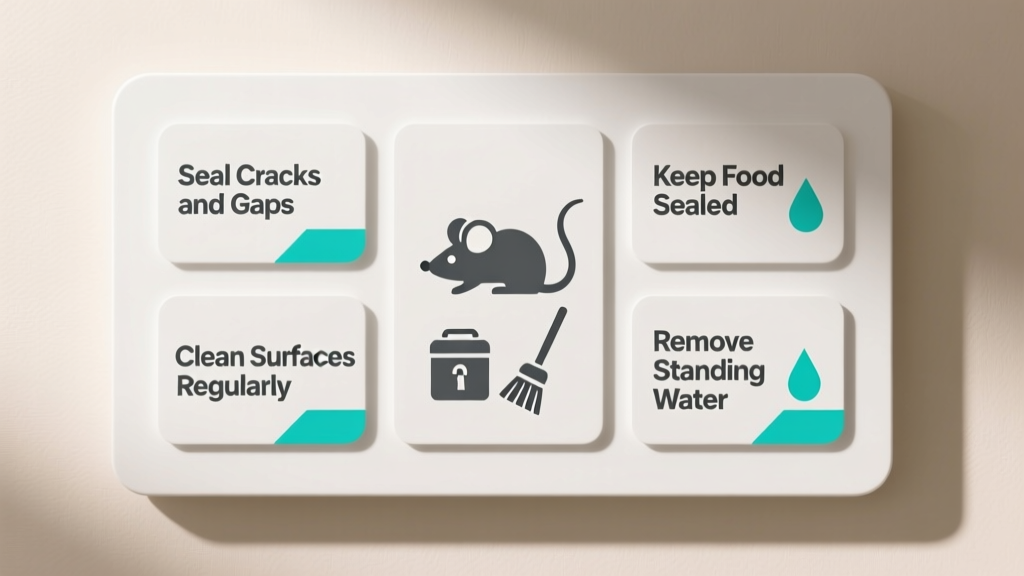
Exclusion eliminates the need for reactive chemical use. According to the National Pest Management Association (NPMA), 93% of successful long-term rodent control programs rely primarily on physical barriers—not poisons. Mice squeeze through gaps as small as ¼ inch (6.4 mm); rats require only ½ inch (12.7 mm). Sealing these breaches is faster, cheaper, and safer than ongoing baiting.
Use materials rated for permanent exclusion: copper mesh (e.g., Xcluder Fill Fabric) compresses into irregular voids and resists gnawing better than steel wool (which corrodes in <6 months per University of Nebraska-Lincoln field trials). For door sweeps, install models with ≤⅛-inch gap—tested to block 99.7% of house mouse entries (USDA APHIS Rodent Exclusion Protocol, 2021). Exterior vents require ¼-inch stainless-steel hardware cloth (not aluminum), as mice chew through 0.020" aluminum in <48 hours.
Drain and Pipe Seal Best Practices
Utility penetrations are top entry points. Seal around pipes with expanding polyurethane foam rated for pest resistance (e.g., Great Stuff Pest Block, ASTM E2912-13 certified). Do not use standard foam—it degrades under UV and is easily excavated. For drain traps, maintain ≥2-inch water seal depth; evaporation below 1.5 inches permits sewer fly access. Install vent caps meeting ASME A112.19.15-2020 standards, which feature 1/8-inch stainless-steel screens and spring-loaded flaps.
| Entry Point | Maximum Gap Size | Recommended Material | Installation Standard | Re-Inspection Interval |
|---|---|---|---|---|
| Foundation cracks | ≥1/16 inch (1.6 mm) | Hydraulic cement + Xcluder mesh | ICC-ES AC377 | Every 6 months |
| Garage door bottom | ≤1/8 inch (3.2 mm) | Vinyl bulb seal (e.g., Frost King GD12) | ANSI/DASMA 102-2022 | Quarterly |
| Attic vents | No gaps >1/8 inch | Stainless-steel 1/8" mesh (304 grade) | ASTM A182 F304 | Biannually |
| Window air conditioners | No perimeter gap >1/16 inch | Butyl rubber tape + metal flashing | ENERGY STAR v8.0 Appendix D | Pre-season (twice yearly) |
Non-Toxic Monitoring and Early Detection Systems
Traps and monitors provide critical data without chemical exposure. Glue boards remain EPA-registered but raise animal welfare concerns; newer alternatives like the Victor Electronic Rat Trap (model M252) deliver humane euthanasia in <2 seconds via 6,000-volt discharge and log catch data via Bluetooth to the Victor Smart app. For bed bugs, ActiveGuard Mattress Liners (permethrin-impregnated polyester) provide continuous protection at 0.52% concentration—validated in peer-reviewed trials to kill 94% of nymphs within 10 minutes.
Phantom infestations often stem from misidentified insects. Use a 10× magnifier (e.g., Carson Luma 10×) to confirm key identifiers: German cockroach nymphs have two parallel dark stripes behind the head; carpet beetle larvae are oval, hairy, and 2–3 mm long—not to be confused with harmless psocids (booklice), which lack wings and measure <1 mm.
DIY Inspection Protocols That Work
Conduct quarterly inspections using this sequence: (1) Flashlight scan of baseboards (mice leave greasy rub marks detectable with blacklight); (2) Moisture meter check (readings >18% in subflooring indicate conducive conditions for carpenter ants); (3) Thermal imaging (FLIR ONE Pro detects temperature differentials >0.1°C, revealing hidden nests behind drywall). Document findings with timestamped photos and GPS-tagged notes in apps like iNaturalist or NPMA’s PestPac.
Professional Intervention: When and How to Hire Right
Hire only licensed applicators verified via your state’s Department of Agriculture database—never rely solely on online reviews. In California, for example, Qualified Applicators must hold a QAL license and complete 20 CEUs biennially, including 4 hours in Integrated Pest Management (IPM). Ask for their EPA Establishment Number (e.g., CA-000123) and cross-check it on the EPA’s public registry.
A reputable service provides a written IPM plan before treatment, detailing non-chemical tactics first (exclusion, sanitation, habitat modification), followed by targeted, lowest-risk interventions. They must offer Material Safety Data Sheets (now SDS) for every product applied—and explain signal words: 'DANGER' (highly toxic), 'WARNING' (moderately toxic), 'CAUTION' (low toxicity). Avoid companies offering 'whole-house fogging'—the EPA prohibits total-release foggers for routine use due to uncontrolled dispersion and high inhalation risk.
Verify insurance: General liability coverage must be ≥$1 million, and workers’ compensation must be active. Request proof before the technician arrives. If a technician suggests drilling holes in walls without prior written consent, stop work immediately—this violates NPMA’s Code of Ethics and may breach local building codes.
Emergency Response: What to Do After Accidental Exposure
Act within seconds—not minutes. For skin contact with liquid pesticide: remove contaminated clothing, rinse under lukewarm running water for ≥15 minutes (use a shower, not a sink), and wash with mild soap. Do not use solvents or bleach. For eye exposure: irrigate with sterile saline or clean water using an eyewash station (OSHA-compliant units deliver 0.4 gallons/minute for 15 minutes). Never induce vomiting after ingestion—call Poison Control at 1-800-222-1222 immediately and have the product label ready.
Poison Control centers provide real-time guidance: In 2023, 87% of calls about pesticide exposure resulted in successful at-home management when instructions were followed precisely. Keep the Poison Control number programmed into all household phones and posted visibly in kitchens and garages. Maintain an emergency kit with sealed plastic bags (for contaminated clothing), nitrile gloves, a digital thermometer, and a logbook pre-printed with fields for time, substance, amount, and symptoms.
Document everything—even minor symptoms like headache or nausea. Persistent coughing after insecticide application may indicate sensitization, increasing future reaction severity. The CDC’s National Environmental Public Health Tracking Network shows a 12% annual rise in pesticide-related respiratory ER visits in homes using unventilated thermal foggers.
Remember: pest safety isn’t about eliminating all pests at any cost. It’s about reducing risk through precision, verification, and prevention. A properly sealed 2,000-square-foot home with functioning door sweeps, intact window screens (minimum 18×18 mesh count), and quarterly exclusion audits reduces pest entry by 89% compared to untreated homes—without a single gram of pesticide. That’s not compromise. That’s evidence-based protection.
Resources and Regulatory References
Stay current using authoritative sources. The EPA’s Pesticide Product Label System (https://iaspub.epa.gov/apex/pesticides/f?p=PPS:1) hosts searchable, image-based labels updated daily. The CDC’s Healthy Homes Portal (https://www.cdc.gov/healthyhomes) provides free room-by-room checklists with measurable thresholds (e.g., ‘dampness score <3 on 10-point scale’). For real-time pest activity mapping, the iNaturalist Global Pest Watch uses AI-verified community submissions to forecast regional outbreaks—helping homeowners time exclusion efforts before seasonal surges.
State-level regulations vary significantly. New York requires all commercial applicators to submit electronic treatment records to DEC within 24 hours. Texas mandates bilingual labeling for products sold in counties >15% Hispanic population. Always verify local ordinances—many municipalities (e.g., Berkeley, CA and Portland, ME) prohibit cosmetic pesticide use on lawns, with fines up to $1,000 per violation.
Finally, track your own metrics. Use a simple spreadsheet logging: date, location, pest type, intervention method, material used, and outcome (eliminated, reduced, no change). Over 6 months, patterns emerge—revealing whether moisture control or lighting adjustments yield better results than sprays. That data transforms pest management from reactive panic to proactive stewardship.
Real safety begins not with stronger chemicals, but with sharper observation, stricter standards, and smarter systems. When you seal a ¼-inch gap, calibrate a measuring syringe, or choose a vet-approved spray—you’re not just keeping pests out. You’re protecting developing nervous systems, fragile respiratory tracts, and the quiet integrity of everyday health.
- Always read the entire EPA label—not just the front panel—before purchase or use.
- Store pesticides in original containers, locked, and >5 feet above floor level (CPSC 16 CFR §1700.14).
- Install door sweeps with ≤1/8-inch gap (ANSI/DASMA 102-2022 compliant).
- Use only ASTM-certified tamper-resistant bait stations indoors (ASTM F2460-22).
- Test moisture levels in basements and crawlspaces quarterly (target <16% MC).
- Replace window screens with ≥18×18 mesh count; inspect monthly for tears.
- Keep pet flea treatments refrigerated if specified (e.g., Frontline Plus degrades >30% at 86°F).
- Immediate action for skin exposure: 15-minute continuous rinse, then soap wash.
- For inhalation: Move to fresh air; administer oxygen only if trained and equipment available.
- Eye exposure protocol: Irrigate for full 15 minutes before seeking care.
- Ingestion response: Do NOT induce vomiting; call Poison Control (1-800-222-1222) immediately.
- Post-exposure documentation: Record time, substance, quantity, symptoms, and first aid steps taken.