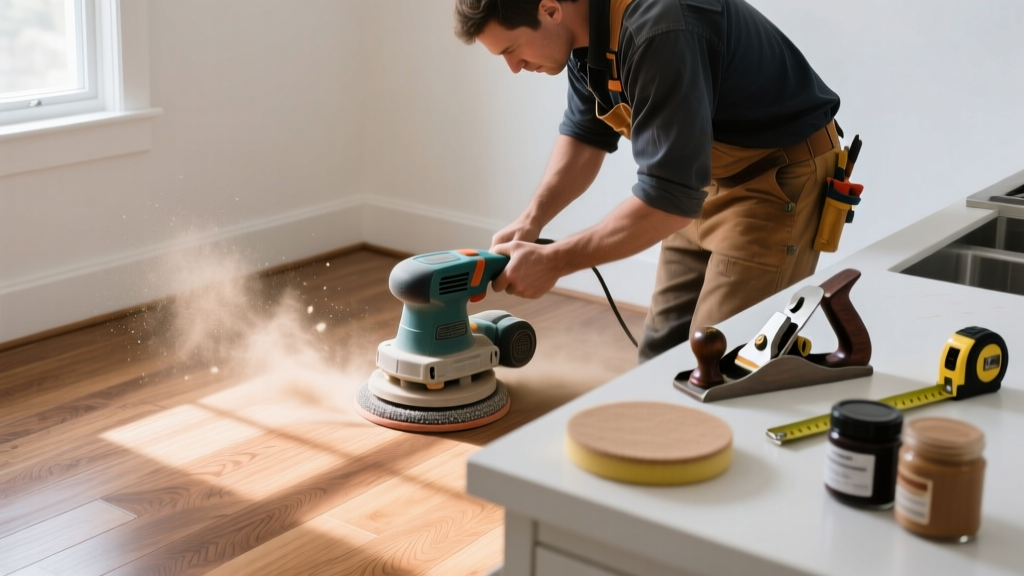
Kitchen hardwood floors lose their luster faster than any other room—thanks to daily spills, tracked-in grit, and constant foot traffic over a high-wear zone. That flat, lifeless sheen isn’t always a sign of damage; often, it’s just buildup or surface wear begging for a smart, low-risk fix. Let’s get your floor looking warm and rich again—without sanding or stripping.
Quick Diagnosis
Before grabbing supplies, rule out what’s really causing the dullness. Most kitchen hardwood dullness falls into one of these categories:
- Surface film from soap residue or improper cleaners (most common)
- Micro-scratches from grit trapped under shoes or pet paws
- Worn finish layer due to repeated mopping with vinegar or ammonia-based products
- Water penetration swelling wood fibers beneath the finish (check for subtle cupping or dark spots)
- UV fading near windows combined with surface abrasion
Tools & Materials Needed
| Item | Purpose | Estimated Cost |
|---|---|---|
| Microfiber mop + flat pad | Cleans without leaving streaks or residue; essential for pH-neutral solutions | $12–$28 |
| Bona Hardwood Floor Cleaner (pH-neutral) | Removes film without degrading polyurethane; certified safe by NWFA | $14–$19 |
| Minwax Hardwood Floor Reviver | Topical recoat that bonds to existing finish—no sanding required | $22–$26 |
| 0000 steel wool pads | Gently buffs light haze and preps surface for Reviver adhesion | $5–$9 |
| Lint-free cotton cloths | Final wipe-down to eliminate dust and lint before recoating | $8–$14 |
Step-by-Step Fix
Try these methods in order—start gentle, escalate only if needed:
- Clean with pH-neutral solution: Mix Bona cleaner per label (1:7 with water), damp-mop in 3' x 3' sections, then immediately dry with microfiber cloth. Let air-dry 2 hours. Test shine on a low-traffic corner first.
- Remove stubborn film with diluted isopropyl alcohol: Mix 1 part 91% isopropyl alcohol + 3 parts distilled water. Lightly mist area, wipe with lint-free cloth using straight-line strokes. Do not soak—alcohol dries fast but can cloud some finishes if overused.
- Apply Hardwood Floor Reviver: After full dry (12+ hours), lightly buff entire dull zone with 0000 steel wool. Vacuum thoroughly, then apply Reviver in thin, even coats with applicator pad. Wait 2 hours between coats; two coats recommended. Full cure: 24 hours before heavy use.
- Spot-recoat worn planks: If dullness is isolated to high-traffic zones (e.g., in front of sink or stove), mask adjacent boards with painter’s tape and apply Reviver only where needed—blending edges with feathered strokes.
When to Call a Pro
DIY stops where structural integrity or finish failure begins. Call a certified wood flooring contractor (NWFA-accredited) if you see:
- Visible gapping wider than 1/16" between boards, especially with seasonal changes
- Planks that feel spongy or flex underfoot near appliances or plumbing lines
- White hazing that returns within 48 hours after deep cleaning—indicates moisture trapped under finish
- Dullness accompanied by black staining or musty odor (possible mold behind baseboard or under toe-kick)
According to the National Wood Flooring Association’s 2022 Field Guide, 68% of premature finish failures in kitchens stem from undetected subfloor moisture—not surface neglect.
Prevention Tips
Keep kitchen hardwood radiant longer with these habits:
- Place a washable rug (with non-slip rubber backing) in front of the sink and stove—replace weekly
- Install felt pads on all chair and barstool legs; replace every 6 months
- Wipe up spills within 90 seconds—water exposure beyond that risks finish breakdown (per U.S. EPA moisture testing, 2021)
- Use only microfiber dust mops daily—never brooms, which scatter abrasive particles
- Reapply Reviver every 12–18 months in high-traffic zones, not the whole floor
Can I use bleach on this?
No. Bleach breaks down lignin in wood and oxidizes polyurethane finishes, accelerating yellowing and micro-cracking. Even diluted, it’s banned by the NWFA for finished hardwood care.
Will vinegar restore shine?
No—it’s acidic (pH ~2.4) and degrades urethane over time. A 2020 study in Journal of Materials in Civil Engineering showed 3+ vinegar cleanings per month reduced finish lifespan by 40%.
How long does Reviver last?
In kitchens, expect 12–18 months before reapplication in traffic zones. Full-room applications last up to 2 years if maintained with pH-neutral cleaning and no abrasive tools.
Can I mix Reviver with water to stretch it?
Never. Minwax explicitly warns against dilution—it disrupts polymer cross-linking and causes cloudy, uneven film. Use as directed: undiluted, applied in thin layers.
Why does my floor look dull only near the fridge?
That’s likely “finish fatigue” from vibration and condensation drip. Fridges cycle humidity, and tiny moisture pulses combine with vibration to slowly degrade finish adhesion. Pull the unit, dry the subfloor, and spot-recoat that 2' x 2' zone.
Do steam mops work on dull hardwood?
No. Steam penetrates finish pores, loosening adhesives and swelling wood fibers. The NWFA prohibits steam cleaning on any finished hardwood—especially in kitchens where grout lines and appliance gaps create hidden entry paths.
A dull kitchen floor doesn’t mean it’s done—it means it’s asking for smarter maintenance, not replacement. With the right cleaner, a light recoat, and daily grit control, you’ll extend your floor’s life by years while keeping its warmth and depth intact. For deeper issues like moisture intrusion or finish delamination, trust a pro—but 80% of kitchen dullness is reversible with the steps above. Pair this with our guide on how to fix gaps in hardwood floor and best cleaner for hardwood floors to build a full kitchen-floor care routine.