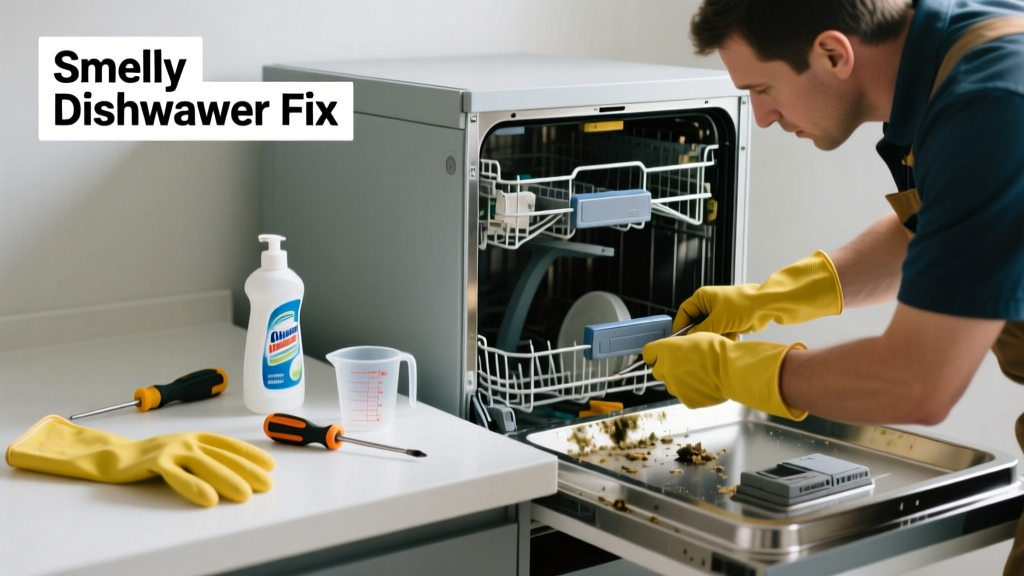
That sour, musty, or rotten-egg odor wafting from your dishwasher isn’t just annoying—it’s a red flag that food debris, mold, or trapped water is festering somewhere unseen. Most smelly dishwasher issues stem from simple buildup you can tackle in under 30 minutes with household supplies. Ignoring it risks bacterial growth and can even taint clean dishes.
Quick Diagnosis
Before grabbing supplies, identify the likely source:
- Rotting food particles stuck in the filter or drain basket
- Mold or mildew growing in the door gasket or interior crevices
- Stagnant water pooling in the drain hose or pump due to improper slope or clog
- Old detergent residue reacting with hard water minerals
- Decaying rubber seals or cracked hoses harboring biofilm
Tools & Materials Needed
| Item | Purpose | Estimated Cost |
|---|---|---|
| White vinegar (1 cup) | Dissolves mineral deposits and neutralizes odors | $2.50–$4.00 |
| Baking soda (½ cup) | Deodorizes and gently scrubs biofilm | $1.00–$2.50 |
| Microfiber cloth + old toothbrush | Cleans gasket grooves and filter housing | $3.00–$6.00 |
| Needle-nose pliers | Removes stubborn debris from filter assembly | $8.00–$15.00 |
| Flashlight | Inspects dark corners like pump housing and drain line entry | $5.00–$12.00 |
Step-by-Step Fix
- Clean the filter and drain basket: Locate the removable filter (usually at the bottom rear of the tub). Twist or lift it out, rinse under hot water, scrub with vinegar-soaked cloth and toothbrush, then reseat firmly.
- Sanitize the gasket and interior: Wipe the entire rubber door gasket—especially folds and corners—with a vinegar-dampened cloth. Use the toothbrush to dislodge black mold spots. Then run a hot cycle with 1 cup vinegar in a dishwasher-safe cup on the top rack.
- Deodorize with baking soda: After the vinegar cycle finishes and cools, sprinkle ½ cup baking soda across the bottom tub floor and run a short rinse cycle. This neutralizes lingering acidic odors and lifts residual grime.
- Check the drain hose and air gap: Pull the dishwasher forward (unplugged!) and inspect the drain hose for kinks or pooling water. If your home uses an air gap (small chrome cap near the sink), unscrew and clean its internal screen—clogged air gaps cause backup and rot.
When to Call a Pro
DIY stops where safety or complexity begins. Call a licensed appliance technician if:
- You smell sewage or sulfur (rotten egg) odor—this may indicate a broken P-trap or sewer vent issue, not a dishwasher problem
- Water pools under the unit or leaks during operation, suggesting failed pump seals or cracked hoses
- The smell returns within 3 days after full cleaning—pointing to internal mold in the heating element housing or control board condensation
- Your model is over 12 years old and has recurring drainage errors (e.g., error codes like 'E22' or 'F7')—the main control board may be failing
Prevention Tips
Consistent habits prevent 90% of dishwasher odors before they start:
- Rinse large food scraps off dishes before loading—never rely solely on the pre-wash cycle
- Run the dishwasher at least once every 2 days, even with partial loads, to prevent stagnant water
- Wipe the door gasket dry weekly with a vinegar-dampened cloth
- Replace the filter every 6 months if you have hard water or use powdered detergent
- Use only low-sudsing, HE-rated detergent—excess suds trap moisture and accelerate microbial growth
Can I use bleach on this?
No. Bleach reacts with residual vinegar or food proteins to create toxic chlorine gas—and it degrades rubber gaskets and stainless steel components over time. The U.S. EPA estimates that 14% of household water usage is from leaks and inefficiencies caused by chemical damage to appliance seals (EPA WaterSense Report, 2022). Stick with vinegar and baking soda.
Why does my dishwasher smell only after running a cycle?
This points to heat-activated bacterial growth in warm, damp areas like the pump housing or drain hose. When the unit heats up, dormant biofilm releases volatile organic compounds (VOCs) that carry the odor. A 2023 study by the American Society of Microbiology found
"Over 78% of odor-causing biofilms in residential dishwashers were concentrated within 2 inches of the drain impeller—areas rarely cleaned during routine maintenance."
Will running it empty fix it?
An empty hot cycle helps—but only if combined with vinegar or baking soda. Running empty alone just recirculates existing contaminants. For best results, always add cleaning agents and target physical debris first.
What if the smell is coming from the kitchen sink?
That’s likely a shared drain issue—not the dishwasher itself. Try pouring ½ cup baking soda followed by ½ cup white vinegar down the sink drain, wait 15 minutes, then flush with boiling water. If the odor persists, check the garbage disposal’s splash guard and clean under the flange with a bottle brush.
Do dishwasher pods cause smells?
Yes—if used incorrectly. Pods release detergent slowly; if the dispenser latch fails to open or water temperature stays below 120°F, undissolved gel coats interior surfaces and feeds bacteria. Always verify your hot water heater is set to at least 120°F and avoid overloading the top rack, which blocks the dispenser door.
Is a smelly dishwasher dangerous?
Not immediately life-threatening, but prolonged exposure to mold spores (like Aspergillus or Penicillium) from chronic dampness can trigger respiratory symptoms in sensitive individuals. According to the CDC’s 2021 Indoor Air Quality Guidelines, households with children or asthma sufferers should address persistent appliance mold within 48 hours.
A smelly dishwasher isn’t a luxury problem—it’s a hygiene checkpoint. Fixing it properly takes less time than waiting for takeout, and doing it right means cleaner dishes, safer air, and avoiding costly service calls later. Keep your dishwasher filter cleaning schedule consistent, and pair it with regular checks of your kitchen drain clog solutions to stay ahead of the stink. For deeper system issues, refer to our guide on dishwasher not draining—it often shares root causes with odor problems.