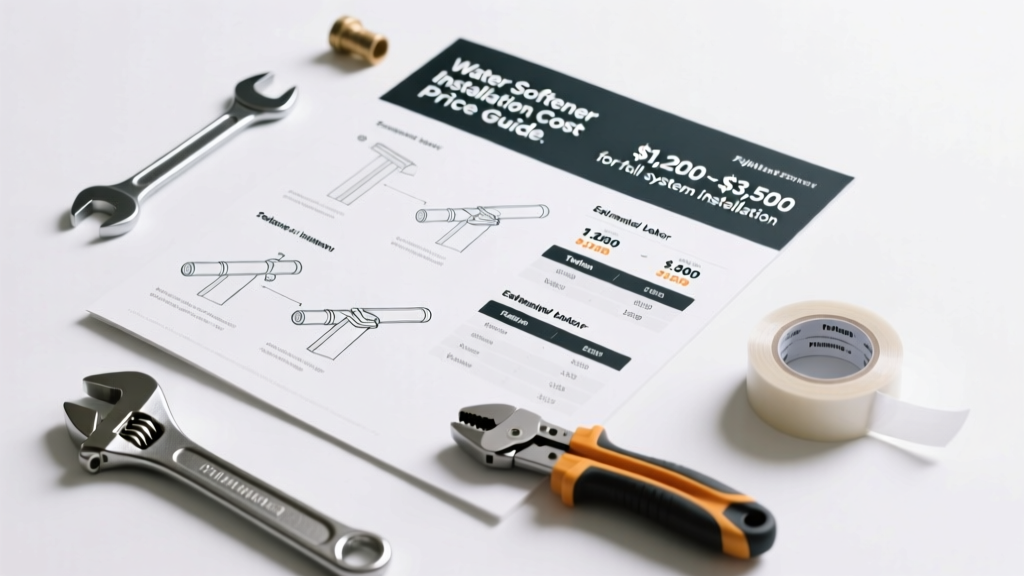
Water softener installation costs aren’t one-size-fits-all. A basic salt-based system in a garage with existing plumbing access might cost under $1,000 total, while a whole-house, no-salt, smart-enabled unit with repiping could top $4,500. This guide breaks down real-world pricing—what’s included, what’s not, and where hidden fees hide.
Quick Price Range
| Service/Item | Low End | Average | High End |
|---|---|---|---|
| Basic salt-based unit + labor (standard setup) | $1,200 | $1,850 | $2,600 |
| No-salt (TAC or template-assisted crystallization) system | $2,100 | $3,200 | $4,500 |
| Drain line extension + electrical outlet addition | $180 | $320 | $650 |
| Permitting & inspection (varies by municipality) | $0 | $75 | $220 |
What Affects the Price
Five key variables shift your final bill:
- Unit type and capacity: A 32,000-grain salt-based unit averages $800–$1,400; a 48,000-grain or dual-tank model adds $400–$900 before labor.
- Plumbing configuration: Installing behind a water heater in a tight basement crawlspace may add $250–$450 for extended labor time versus mounting near a laundry room cold-water line.
- Water hardness level: Above 25 gpg? You’ll likely need a larger or dual-tank system—raising both equipment and labor costs.
- Electrical and drain requirements: Most units need a dedicated 120V outlet and a floor drain or standpipe. Adding either runs $120–$380 each.
- Municipal code compliance: In California and parts of Texas, no-salt systems are required in some areas—pushing base costs up 40–60%.
DIY vs Professional Installation
While DIY kits exist, most homeowners underestimate complexity. Here’s how costs compare when factoring in risk and warranty validity:
| Factor | DIY | Professional |
|---|---|---|
| Equipment cost only (mid-tier 40k-grain unit) | $950 | $950 |
| Labor & setup (est. 4–6 hours) | $0 | $450–$850 |
| Permits, inspections, and paperwork | $0–$220 (if caught noncompliant) | Included or handled ($75 avg.) |
| Warranty coverage (manufacturer voids if not pro-installed) | Voided | Full 5–10 year parts/labor coverage |
| Cost of leak damage or rework (per HomeAdvisor 2023 data) | $1,200 avg. repair | $0 (covered under installer liability) |
Money-Saving Tips
You don’t have to sacrifice performance to cut costs. Try these field-tested strategies:
- Get quotes from at least three licensed plumbers—plumber rates vary widely by region, and competitive bidding often trims $200–$500 off the high quote.
- Time your install during off-peak months (January–March); many contractors offer 8–12% discounts to fill winter schedules.
- Ask about bundled services: pairing softener install with a water heater flush or pressure regulator upgrade can net $150–$300 in labor savings.
- Choose a single-tank salt-based system unless your household exceeds 4 people or has confirmed iron levels >0.3 ppm—dual tanks rarely justify the $600+ premium for average homes.
Does my home even need a water softener?
Test first. Hardness above 7 grains per gallon (gpg) causes scale buildup and soap scum. A $15 test kit or free municipal water report tells you what you’re dealing with. According to the U.S. Geological Survey’s 2022 National Water Quality Assessment, 85% of U.S. homes have water exceeding 7 gpg—especially in the Midwest and Southwest.
How long does installation take?
Most professional installs finish in 4–6 hours. That includes shut-off, cutting into the main cold line, installing bypass valves, connecting brine tank, programming controls, and flushing the system. Complex retrofits—like running new PVC through a concrete slab—can stretch to two days.
Do I need a permit?
Yes, in 32 states and most municipalities requiring plumbing permits for any alteration to potable water supply lines. Skipping it risks failed inspections, insurance claim denials, and fines up to $1,000. Your installer should handle this—but verify they’re pulling the permit *in your name*.
What’s included in a standard installation?
A full-service install covers unit mounting, inlet/outlet connections, bypass valve setup, brine tank fill, control valve programming, and post-install water testing. It does not include replacing corroded shut-off valves, adding new electrical circuits, or drywall repair—those are quoted separately.
Can I upgrade later without reinstalling?
Yes—if you choose a modular brand like Fleck or Clack, many control valves accept upgraded resin tanks or digital controllers. But avoid proprietary systems (e.g., some Culligan models) that lock you into costly service contracts for firmware updates or part replacements.
Is maintenance included in the installation cost?
No. Annual maintenance—cleaning the brine tank, checking resin bed integrity, verifying salt levels—costs $120–$220. Some installers offer 1-year maintenance packages for $99 as an add-on. Skipping it risks premature resin fouling, especially in homes with iron or chlorine-heavy municipal water.
"Over 60% of premature softener failures stem from improper initial installation—not product defects," says licensed master plumber and WQA-certified trainer Marcus Lee, speaking at the 2023 Water Quality Association Conference.
Whether you’re battling spotty glasses, stiff laundry, or shortened appliance life, knowing exactly where your water softener dollars go helps you invest wisely—not just spend. Compare quotes carefully, confirm licensing and insurance, and never skip the water test. For more on related upgrades, see our guides on whole-house filter installation and well water treatment systems.