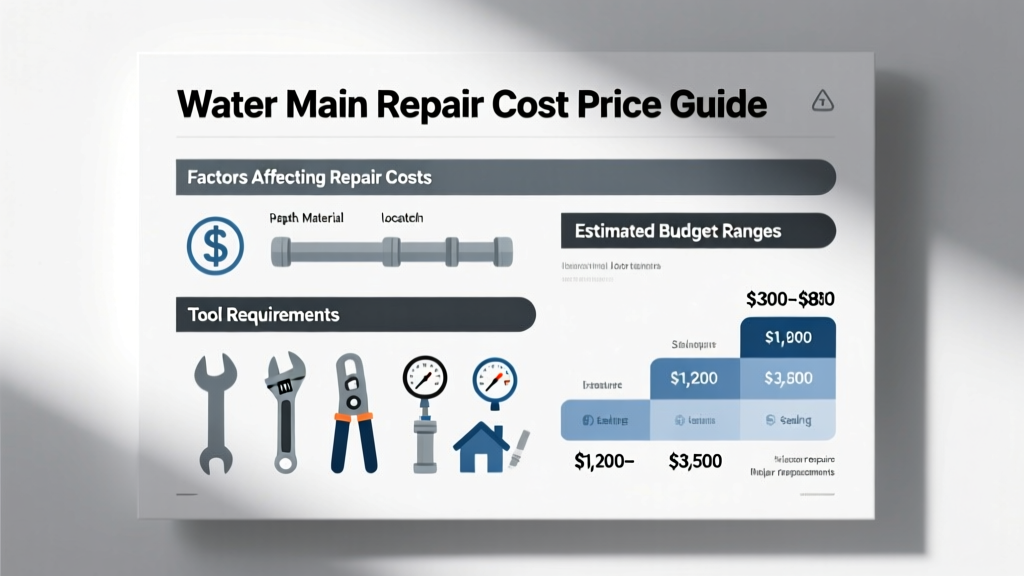
Water main repairs aren’t one-size-fits-all: a cracked ¾-inch copper line under a gravel driveway costs far less than a corroded 2-inch cast iron pipe buried beneath a concrete patio with gas lines nearby. This guide breaks down real-world price ranges, explains why quotes vary so widely, and gives you practical ways to control costs—whether you’re dealing with a leak, burst, or full replacement.
Quick Price Range
| Service/Item | Low End | Average | High End |
|---|---|---|---|
| Minor leak repair (exposed section) | $1,200 | $2,100 | $3,400 |
| Burst pipe repair (buried, <10 ft) | $2,300 | $3,600 | $4,900 |
| Full main replacement (30–50 ft, PVC) | $3,800 | $4,700 | $5,800 |
| Replacement with trenchless method | $4,200 | $5,100 | $6,900 |
What Affects the Price
Five key variables shift your final bill—some are controllable, others aren’t:
- Depth and accessibility: Digging 2 feet deep through soil is straightforward; excavating 6 feet through compacted clay or removing pavers adds labor and equipment time.
- Pipe material: Replacing old galvanized steel ($12–$18/ft) often requires more excavation due to corrosion scale, while PEX or HDPE installs faster and cleaner.
- Permitting and inspections: Most municipalities require permits for main work—fees range from $75 to $320, and failed inspections trigger rework charges.
- Utility conflicts: Hitting a gas line, fiber optic cable, or sewer lateral during excavation can double labor time and add third-party mitigation fees.
- Seasonal timing: Repairs in frozen ground (December–February in northern states) cost 18–25% more due to thawing prep and overtime pay, per the National Association of Home Builders’ 2023 Infrastructure Report.
DIY vs Professional
While minor above-ground shutoff valve fixes may be DIY-able, water main work almost always requires licensed professionals—especially where it crosses property lines or connects to city infrastructure. Here’s how costs compare when weighing options:
| Cost Factor | DIY Attempt | Licensed Pro |
|---|---|---|
| Materials only (PVC, fittings, backfill) | $420 | $420 |
| Labor (self + rental equipment) | $0–$1,100 | $2,800–$3,900 |
| Permits & inspection fees | $0 (often skipped, risking fines) | $180–$320 |
| Risk of damage or code violation | High — voids insurance, triggers $5k+ remediation | Insured & bonded — liability covered |
Money-Saving Tips
You don’t have to accept the first quote—or overpay for preventable issues. These strategies consistently lower out-of-pocket costs:
- Get three itemized bids: Ask each plumber to break out material, labor, permit, and disposal fees separately—this exposes markup on common items like fittings or backfill.
- Time your repair off-season: Scheduling between March and May avoids winter surcharges and summer backlog delays that inflate hourly rates.
- Bundle with other site work: If you’re repaving a walkway or replacing a fence, coordinate excavation to avoid multiple digs—contractors often discount 10–15% for overlapping labor.
- Verify your utility’s responsibility: Many cities cover repairs from the meter to the street (e.g., Portland Water Bureau’s 2024 policy). Call before hiring—meter-to-street repairs may be free.
How much does a water main leak cost to fix?
A small leak at a fitting or joint—not a full break—typically costs $1,200 to $2,600. That includes locating the leak (acoustic listening devices or ground-penetrating radar), digging a 3–5 ft trench, cutting out the damaged section, and pressure-testing the repair. According to the Insurance Institute for Business & Home Safety's 2023 report, undetected leaks average $320/month in wasted water—making early detection a cost-saver.
Does homeowners insurance cover water main repair?
Standard policies rarely cover wear-and-tear or aging pipes—but they may cover sudden, accidental damage (like a tree root rupture or excavation accident). You’ll need an endorsement like “service line coverage,” which averages $50–$120/year and typically covers up to $10,000 in repair costs. Check your policy’s exclusions—water damage coverage details vary widely by state and carrier.
How long does water main repair take?
Most residential repairs take 1–3 days. Simple leak patches finish in under 8 hours. Full replacements—including permitting, excavation, pipe laying, backfill, compaction, and restoration—take 2–5 days. Trenchless methods (pipe bursting or slip-lining) shave 1–2 days off timeline but add $800–$1,600 in specialty equipment fees.
Can tree roots cause water main failure?
Yes—especially with older clay or cast iron mains. Roots seek moisture through hairline cracks, then expand and fracture the pipe. The U.S. EPA estimates 30% of service line failures in homes over 40 years old are root-related. Installing root barriers during repair (root barrier cost guide) adds $180–$350 but prevents repeat repairs.
What’s the difference between water main and service line?
The water main is the large municipal pipe running under the street. Your service line is the smaller pipe (usually ¾”–2”) that runs from the main to your home’s shut-off valve—this is your responsibility to maintain and repair. Confusing the two leads to misdirected calls and delayed fixes.
How do I know if my water main is failing?
Watch for low water pressure across all fixtures, discolored or muddy water (especially after rain), unexplained wet spots in your yard, or a sudden spike in your water bill. As one master plumber told us:
“If your water pressure drops every time your neighbor waters their lawn, your main is likely collapsing internally—don’t wait for a break. We catch 60% of failing mains during routine pressure tests before they blow.” — Carlos Mendez, licensed contractor, Denver Water Alliance (2024)
Water main repairs demand precision, compliance, and experience—not just elbow grease. Knowing the variables upfront helps you spot inflated quotes, avoid costly mistakes, and plan realistically. Whether you’re budgeting for a known issue or prepping for unexpected failure, pairing this guide with a local, licensed pro ensures your investment holds up for decades—not just until the next freeze-thaw cycle.