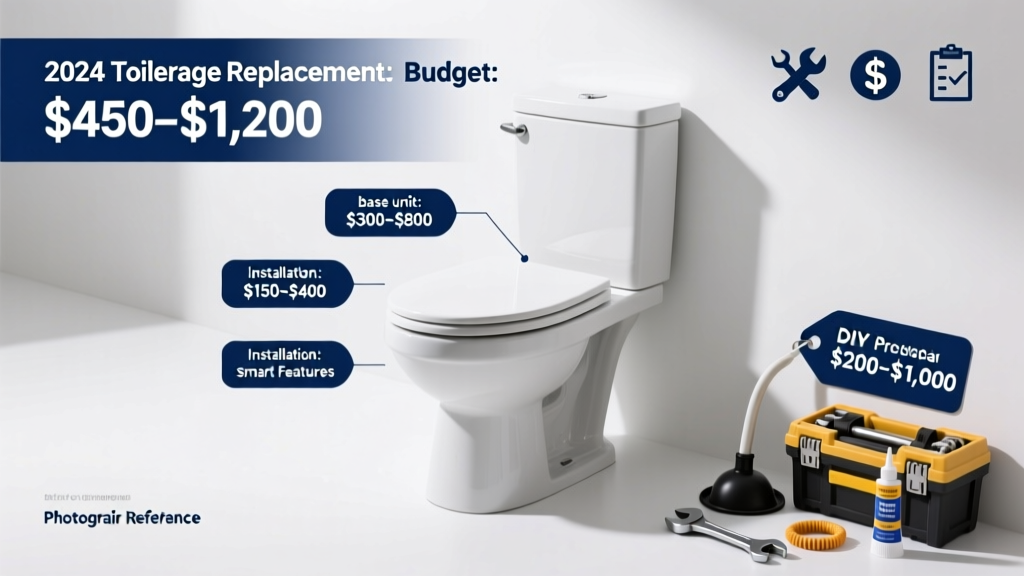
Replacing a toilet isn’t just about swapping out an old fixture—it’s a project shaped by model choice, plumbing condition, labor rates, and whether you’re upgrading in a rental or custom home. This guide breaks down real-world costs from national contractors, big-box retailers, and licensed plumbers, so you can budget confidently and avoid surprise fees.
Quick Price Range
| Service/Item | Low End | Average | High End |
|---|---|---|---|
| Basic gravity-flush toilet (unit only) | $90 | $175 | $320 |
| Premium dual-flush or smart toilet (unit only) | $380 | $695 | $1,650 |
| Professional installation (labor only) | $120 | $275 | $450 |
| Full replacement (toilet + labor + minor repairs) | $250 | $475 | $1,800 |
What Affects the Price
Five key variables drive cost variation—and they’re not always obvious:
- Toilet type: Standard two-piece models cost less than one-piece, wall-hung, or pressure-assisted units. ADA-compliant toilets add $50–$200.
- Plumbing condition: If the flange is cracked, the subfloor is rotted, or supply lines are corroded, repairs push labor up 30–70%. According to the National Association of Home Builders’ 2023 Remodeling Impact Report, 22% of toilet replacements require flange or floor repair.
- Location: Labor runs $65–$125/hour depending on metro area—Seattle and NYC plumbers charge ~40% more than those in Indianapolis or Memphis.
- Permitting: Most jurisdictions don’t require permits for simple toilet swaps, but if you’re relocating the unit or altering drain lines, expect $50–$150 in permit fees and inspection time.
- Disposal: Haul-away fees range $20–$60 unless you take the old unit to a landfill yourself—or donate it to Habitat for Humanity ReStore (some locations accept intact toilets).
DIY vs Professional
While DIY seems like an easy savings play, missteps can cost far more in water damage or code violations. Here’s how the numbers break down realistically:
| Cost Component | DIY | Professional |
|---|---|---|
| Toilet purchase | $90–$320 | $90–$320 |
| Labor | $0 | $120–$450 |
| Tools & supplies (wax ring, bolts, shims) | $12–$28 | Included |
| Risk cost (leak repair, floor damage, rework) | $0–$600+ | $0 (covered under warranty) |
| Total realistic range | $102–$950+ | $250–$1,800 |
Money-Saving Tips
You don’t need to sacrifice reliability to save money. Try these proven strategies:
- Buy during spring sales (March–May) at Home Depot, Lowe’s, or Ferguson—many offer $50–$100 rebates on WaterSense-certified models.
- Reuse existing supply lines and bolts if they’re in good shape (check for corrosion; replace if >10 years old).
- Bundle with other bathroom work—plumbers often discount labor 10–15% when replacing a toilet alongside a faucet or shower valve.
- Get three written quotes—and ask each contractor if their price includes flange inspection and subfloor assessment. As plumbing contractor Maria Ruiz told Today’s Homeowner (2023), “A $300 quote that skips the flange check is a $1,200 problem waiting to happen.”
How much does a plumber charge just to install a new toilet?
Most licensed plumbers charge a flat fee of $225–$375 for standard installation—including removal, wax ring, leveling, and leak test. Hourly rates ($75–$125/hour) apply only if unforeseen issues arise, like broken bolts or warped flooring. Always confirm whether trip fees (typically $50–$95) are waived if you proceed with the job.
Do I need a new wax ring every time?
Yes—always. A reused wax ring rarely seals properly and is the #1 cause of slow leaks at the base. Modern alternatives like rubber gaskets (e.g., Fluidmaster Better Than Wax) cost $12–$18 and tolerate minor misalignment better than traditional wax.
Can I replace a toilet without turning off the main water line?
No—you must shut off the dedicated toilet supply valve (usually behind or beside the tank). If that valve is seized or leaking, you’ll need to shut off the main and possibly replace the valve—a $75–$150 add-on. Don’t skip testing the valve before removal: turn it off, flush, and verify flow stops completely.
Why do some toilets cost $1,500+?
High-end models bundle features like heated seats, automatic lid lift, bidet functions, self-cleaning glaze, and quiet-close hinges. Brands like Toto Neorest and Kohler Numi fall here. While luxurious, most offer marginal efficiency gains over a $250 WaterSense toilet—which uses just 1.28 gallons per flush versus older 3.5-gpf models. For context, the U.S. EPA estimates that upgrading saves the average household $90/year in water bills.
Is a taller (ADA-height) toilet worth the extra cost?
If anyone in your household has mobility challenges, yes—ADA-height toilets (17–19 inches) reduce strain on knees and hips. They cost $30–$120 more than standard 15-inch bowls, but many insurers and state programs partially reimburse them as medical equipment. Check with your bathroom remodeling cost guide for related accessibility upgrades.
What’s the best time of year to replace a toilet?
Early fall (September–October) tends to offer the best balance of contractor availability and competitive pricing—avoiding both spring’s high demand and winter’s holiday slowdowns. Plumbers report 18% fewer emergency calls during this window, according to the Plumbing-Heating-Cooling Contractors Association’s 2024 industry survey, meaning more flexibility for scheduling and negotiation.
Whether you’re refreshing a rental unit or upgrading your master bath, knowing the real drivers of toilet replacement cost helps you prioritize where to spend—and where to save. For related projects, see our guides on water heater replacement cost and shower valve replacement cost.
“A toilet installed wrong doesn’t just leak—it can rot your subfloor in 6 months. That $275 labor fee isn’t for ‘tightening bolts.’ It’s for knowing when the flange needs reinforcement, when the closet bend is too shallow, and when the floor isn’t level enough for a reliable seal.” — Carlos Mendez, Master Plumber & Instructor, PHCC National Training Center (2024)