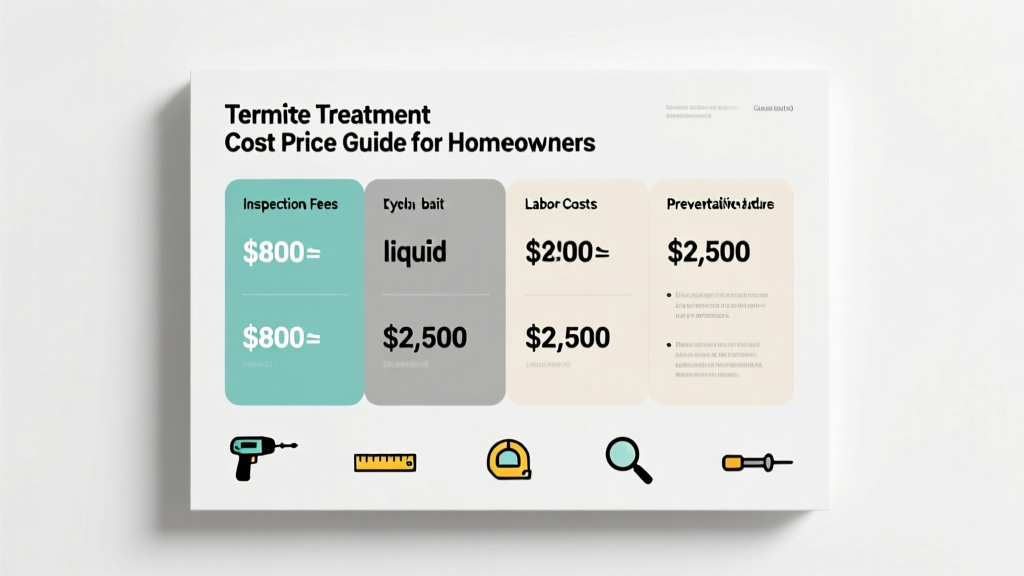
Termite treatment costs aren’t one-size-fits-all. A small localized drywood colony in a garage might cost under $500, while a full subterranean infestation across a 2,800-square-foot slab foundation can top $4,500. This guide breaks down actual price ranges, explains why quotes vary so widely, and gives you realistic ways to control spending—without compromising effectiveness.
Quick Price Range
| Service/Item | Low End | Average | High End |
|---|---|---|---|
| Localized drywood spot treatment | $300 | $650 | $1,200 |
| Whole-house fumigation (drywood) | $1,800 | $2,700 | $4,200 |
| Subterranean liquid barrier (per linear foot) | $3.50 | $5.25 | $8.00 |
| Termite baiting system (initial setup + 1 year monitoring) | $1,200 | $2,100 | $3,400 |
| Structural repair (minor framing replacement) | $900 | $2,300 | $5,000+ |
What Affects the Price
Five key variables drive termite treatment costs more than any marketing brochure:
- Type of termite: Drywood termites require whole-structure fumigation or heat treatments; subterranean colonies demand trenching, drilling, and long-term barrier installation.
- Home construction: Slab foundations cost 20–35% more to treat than crawl spaces (per the National Pest Management Association’s 2023 Termite Service Benchmark Report), due to concrete drilling and injection complexity.
- Infestation severity: Early detection (e.g., frass near windowsills) may allow targeted spot treatment. Active mud tubes along interior walls often signal widespread colony activity—and higher labor hours.
- Geographic location: Labor rates and material costs vary sharply—treatment in Houston averages 18% lower than in Portland, OR, per PestWorld.org’s regional pricing survey (2024).
- Warranty and monitoring: A 5-year renewable warranty with quarterly inspections adds $300–$700 annually but prevents repeat infestations that could double future repair bills.
DIY vs Professional
While DIY kits are tempting, their limitations matter—especially when structural integrity is at stake. Here’s how they compare in practice:
| Factor | DIY Approach | Professional Service |
|---|---|---|
| Upfront cost (for 1,500 sq ft home) | $120–$320 (borate sprays, foams, baits) | $1,100–$3,300 (includes inspection, treatment, report) |
| Efficacy against mature colonies | Low to moderate (only effective on surface-level or early-stage drywood) | High (EPA-registered termiticides with proven soil barrier longevity) |
| Labor time required | 12–20+ hours (drilling, mixing, safety prep, cleanup) | 1–3 days (licensed techs handle permitting, calibration, documentation) |
| Insurance & warranty coverage | None | Standard 1–5 year transferable warranty; often required for home sale disclosures |
Money-Saving Tips
You don’t need to sacrifice protection to save money. These strategies are backed by real contractor feedback and homeowner case studies:
- Get at least three itemized bids—not just totals—with clear breakdowns of labor, materials, and warranty terms.
- Schedule treatment during off-peak months (November–February). Some companies offer 10–15% discounts for winter bookings, per Pest Control Technology’s 2024 contractor survey.
- Combine termite treatment with a termite inspection—many firms waive the $125–$225 inspection fee if you proceed with treatment.
- Ask about “monitor-only” baiting programs first. If no activity appears in 6 months, you avoid full installation costs—and still get early warning.
- Maintain your home’s moisture barriers: fix leaking AC drip lines, clean gutters, and grade soil away from foundations. The U.S. EPA estimates proper moisture control reduces reinfestation risk by up to 60%.
How much does a termite inspection cost?
Most independent inspectors charge $75–$175 for a full visual assessment—including attic, crawlspace, and exterior perimeter. Some lenders require a Wood-Destroying Organism (WDO) report, which runs $125–$225 and includes written certification for mortgage underwriting. Note: Many pest control companies bundle free inspections with treatment quotes—but those reports may omit non-termiticidal findings like carpenter ant damage.
Does homeowners insurance cover termite treatment?
No—standard policies explicitly exclude termite damage and treatment as “maintenance-related.” According to the Insurance Information Institute’s 2023 Home Insurance Fact Book, less than 0.3% of claims involve termites, precisely because coverage isn’t provided. You’ll need a separate termite bond or rider, typically $200–$500/year, which covers retreatment and sometimes limited repairs.
How long does treatment last?
Liquid soil barriers (like Termidor SC) last 8–10 years when applied correctly. Baiting systems require ongoing monitoring—most warranties include annual visits and bait replenishment. Fumigation kills existing drywood colonies but offers zero residual protection; reinfestation is possible within 12–24 months without follow-up barriers.
Can I treat termites myself with boric acid?
You can apply boric acid dust to accessible drywood galleries (e.g., baseboards, window frames), but it’s ineffective against subterranean nests hidden in soil or behind walls. As entomologist Dr. Michael Potter of the University of Kentucky warns:
“Boric acid has no soil mobility or systemic action—it’s a contact dust only. Relying on it alone for an active subterranean infestation is like using duct tape to fix a burst main water line.”
Do I need treatment if I see swarming termites?
Yes—swarmers (alates) indoors mean a mature colony is likely established nearby. Even if you vacuum them up, the parent nest remains active. The National Pest Management Association reports that 73% of homes with indoor swarmers show structural damage within 18 months if untreated.
What’s the cheapest effective treatment option?
For minor, confirmed drywood infestations in isolated wood elements (e.g., a single door frame), localized heat treatment or orange oil injection starts around $450–$850. But for anything beyond that—or any sign of subterranean activity—liquid barrier or baiting remains the most cost-effective long-term solution. Skipping comprehensive treatment now often leads to $3,000+ in hidden framing repairs later.
If you’re weighing options after spotting mud tubes or hollow-sounding beams, start with a certified termite inspection—not a Google search. A qualified inspector documents evidence, identifies species, and recommends only what’s necessary. That clarity alone saves most homeowners $600–$1,400 in unnecessary scope creep.