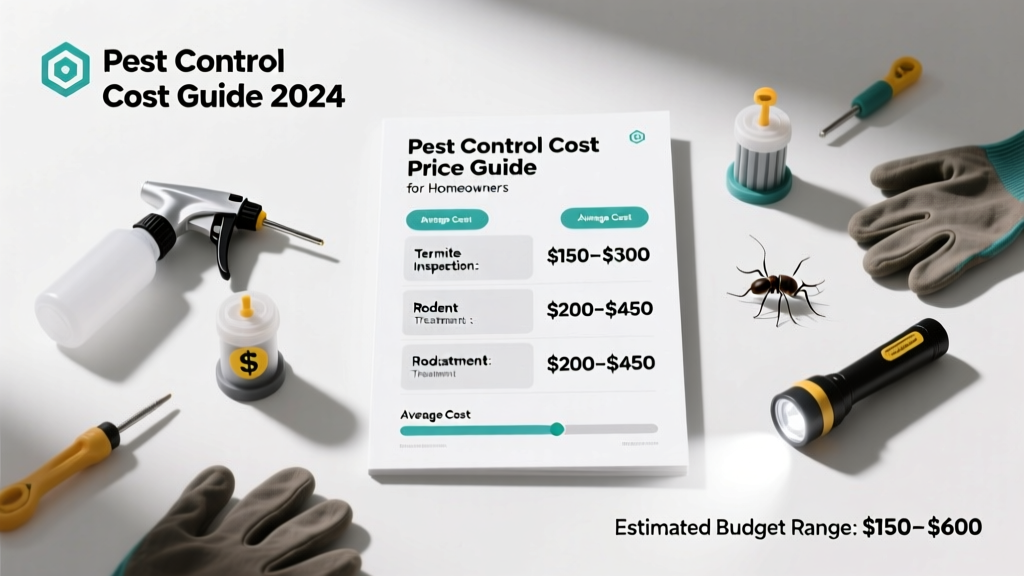
Pest control costs vary widely depending on your location, infestation severity, pest type, and whether you choose DIY or professional service. This guide breaks down real-world price ranges, explains key cost drivers, compares options side-by-side, and shares actionable ways to reduce spending—without compromising safety or effectiveness.
Quick Price Range
| Service/Item | Low End | Average | High End |
|---|---|---|---|
| One-time general pest treatment (interior + exterior) | $50 | $175 | $325 |
| Monthly residential maintenance plan (12-month contract) | $45/month | $65/month | $95/month |
| Termite inspection + treatment (spot) | $250 | $650 | $1,800+ |
| Bed bug heat treatment (1-bedroom apartment) | $1,200 | $2,100 | $3,500 |
| Wildlife removal (e.g., raccoons from attic) | $300 | $675 | $1,400 |
What Affects the Price
Five major factors shift your final bill:
- Infestation size and duration: A single mouse in the garage costs far less than a 6-month rodent colony nesting in insulation.
- Pest species: Bed bugs and termites require specialized equipment and follow-up—driving labor and material costs up significantly.
- Home size and layout: A 3,200 sq ft two-story home with crawl space and detached garage typically costs 40–60% more than a 1,200 sq ft bungalow.
- Geographic region: Labor rates and regulatory requirements differ—e.g., termite treatments in Florida average 22% higher than in Ohio (National Pest Management Association, 2023).
- Service frequency: One-time treatments are cheaper upfront but often less effective; recurring plans include monitoring and retreatments at no extra charge.
DIY vs Professional
While DIY products seem economical, hidden costs—like repeat purchases, ineffective application, or accidental exposure—add up fast. Here’s how they compare on total cost of ownership over six months:
| Approach | Upfront Cost | Time Investment | Success Rate* | Hidden Costs |
|---|---|---|---|---|
| DIY sprays & traps | $85–$140 | 12–20 hours | ~35% | Repeat purchases, damaged drywall from drilling, potential pet toxicity incidents |
| Professional one-time visit | $160–$280 | 0 hours (you’re not involved) | ~78% | None—includes 30-day warranty and free callback if pests return |
| Professional monthly plan | $390–$720/year | 0 hours | ~94% | None—includes seasonal adjustments and priority service |
*Based on NPMA’s 2023 Residential Pest Control Survey: success measured as no reinfestation within 90 days.
Money-Saving Tips
You don’t have to sacrifice protection to save money. Try these proven strategies:
- Negotiate a 12-month contract—most providers offer 10–15% off versus month-to-month billing.
- Bundle services: Combining rodent exclusion with general pest control can lower per-service cost by up to 20%.
- Ask about seasonal discounts: Many companies run promotions in early spring (for ants) and late summer (for stink bugs).
- Do prep work yourself: Seal cracks, clean gutters, and remove clutter before service—some pros reduce fees if homes are prepped thoroughly.
- Compare quotes from three licensed providers—and verify each holds current state pesticide applicator certification.
How much does a one-time ant treatment cost?
For common pavement or odorous house ants, expect $75–$150. Prices climb if colonies are inside walls or linked to moisture damage. According to the National Pest Management Association’s 2023 benchmark report, 68% of one-time ant calls require at least two visits for full resolution—so ask if the quoted price includes a free follow-up.
Is monthly pest control worth it?
Yes—if you live in high-pest-pressure areas (e.g., Gulf Coast, Southeast, Pacific Northwest) or have had repeated infestations. Monthly plans cost more upfront but prevent costly structural damage and health issues. The U.S. EPA estimates that undetected termite activity causes over $5 billion in property damage annually—most of it avoidable with routine inspections.
Do I need an exterminator for spiders?
Most household spiders (like jumping or cobweb spiders) aren’t dangerous and don’t require treatment. But if you spot black widows or brown recluses—or find dozens indoors weekly—a pro assessment is wise. Their identification and targeted treatment usually runs $95–$190, and many companies waive the inspection fee if you proceed with service.
How much does bed bug treatment cost—and why so much?
Heat treatments start around $1,200 because they require industrial-grade heaters, thermal sensors, and certified technicians who monitor temperatures continuously to avoid fire risk or property damage. Chemical-only options are cheaper ($600–$900), but the National Pest Management Association reports a 41% higher recurrence rate without heat integration.
Can I get pest control without signing a contract?
Yes—many local providers offer one-time or pay-as-you-go service. However, national franchises often require contracts for discounted rates. Always read the cancellation policy: some charge 2–3 months’ fees if you exit early. Ask for a written clause stating you can pause service (e.g., during winter travel) without penalty.
Are eco-friendly treatments more expensive?
Not necessarily. Botanical-based sprays (like those using pyrethrins or rosemary oil) cost roughly the same as conventional synthetics—but they often require more frequent applications. Integrated Pest Management (IPM) plans—which combine sealing, sanitation, and minimal chemical use—tend to cost 5–10% less long-term because they reduce reliance on repeat spraying.
"A well-executed IPM plan isn’t just safer—it’s smarter economics. We see 30% fewer service calls after switching clients from calendar-based spraying to behavior-driven prevention." — Dr. Lena Torres, Entomologist & Director of Technical Services, PestWatch Pro (2024)
Ultimately, pest control isn’t about picking the cheapest option—it’s about choosing the right solution for your home’s specific risks and your family’s peace of mind. Start with a thorough inspection, get itemized quotes, and prioritize providers who explain their methods—not just their prices. For ongoing protection, consider pairing professional service with simple preventive habits like sealing gaps around windows and storing food in airtight containers. That combination delivers lasting value, not just temporary relief.