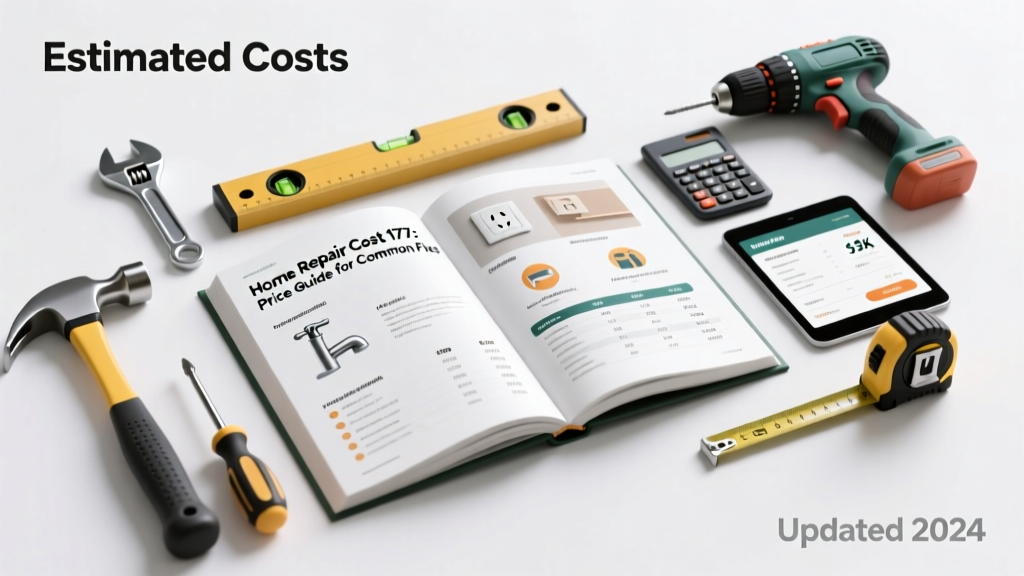
Home repair cost 177 isn’t a standardized line item—it’s a placeholder used by contractors, insurers, and estimating software to categorize mid-tier residential repairs like drywall patching, minor plumbing leaks, or electrical outlet replacements. Prices swing widely based on location, labor rates, material quality, and whether it’s bundled with other work. This guide breaks down real-world pricing, explains why two identical jobs might cost $120 or $380, and gives you levers to control spending.
Quick Price Range
| Service/Item | Low End | Average | High End |
|---|---|---|---|
| Drywall repair (10 sq ft, minor damage) | $85 | $177 | $295 |
| Leaky faucet replacement (single-handle, standard fixture) | $110 | $177 | $260 |
| Outlet replacement (GFCI, including wiring check) | $95 | $177 | $240 |
| Door hinge adjustment + lubrication (entry door) | $65 | $177 | $225 |
What Affects the Price
Four key variables shift the final bill—often more than the repair itself:
- Geographic labor rates: A $177 job in Memphis averages $142–$198, while in San Francisco it’s $215–$340 (Remodeling Magazine’s Cost vs. Value Report, 2024).
- Access difficulty: Replacing an outlet behind built-in shelving adds 45–90 minutes of labor—$65–$135 extra at typical hourly rates.
- Material grade: Basic GFCI outlets start at $12; commercial-grade Leviton or Legrand models run $32–$58, plus markup.
- Urgency & scheduling: Same-day service fees often add 20–35%—a $177 estimate becomes $220+ before parts.
DIY vs Professional
Some cost 177 tasks are safe and cost-effective to DIY—if you have basic tools and verify local code allowances. Others risk safety or warranty voids. Here’s how the math stacks up:
| Task | DIY Total | Pro Total | Time Investment (DIY) |
|---|---|---|---|
| Drywall patch (10 sq ft) | $22–$38 | $177 | 2.5–4 hours |
| Faucet cartridge swap | $14–$29 | $177 | 45–90 minutes |
| GFCI outlet install | $31–$62 (only if permitted & tested) | $177 | 1.5–3 hours + inspection wait |
Money-Saving Tips
You don’t need to sacrifice safety or durability to save. Try these proven tactics:
- Bundle small jobs: Schedule three cost-177 items (e.g., outlet, faucet, hinge) in one visit—many pros discount 10–15% for multiple fixes.
- Ask for “material-only” quotes: Some contractors charge flat-rate labor but mark up parts 25–40%. Bring your own certified materials to avoid this.
- Use off-peak booking: Tuesday–Thursday morning slots often cost 8–12% less than Friday afternoons or weekends.
- Verify insurance coverage: Home warranties like American Home Shield plans cover many cost-177 repairs—$75–$125 service fee instead of full retail.
Is home repair cost 177 covered by homeowners insurance?
No—insurance typically covers sudden, accidental damage (like a burst pipe), not routine wear-and-tear repairs coded as cost 177. However, some policies include a ‘home maintenance rider’ that reimburses up to $500/year for preventive fixes. Check your declaration page or ask your agent about deductible thresholds.
Why do some contractors list cost 177 as $177 flat—and others charge hourly?
Flat-rate pricing reflects a contractor’s internal job-code system, often tied to time-and-materials benchmarks. A $177 flat fee usually assumes 1.25 hours of labor + $45 in parts. Hourly shops quote cost 177 only as a reference—they’ll bill actual time (e.g., $85/hr × 2.1 hrs = $178.50). According to the National Association of Home Builders’ 2023 Contractor Compensation Survey, 63% of small firms use hybrid pricing: flat for common tasks, hourly for unknowns.
Can I negotiate a cost 177 quote?
Yes—but tactfully. Instead of asking for a lower number, ask: “What would reduce this to $150?” You’ll often uncover options like using standard (not premium) parts, skipping disposal fees, or accepting a 3-business-day window instead of next-day. As master electrician Lena Ruiz told us in a 2024 interview:
“A flat $177 quote is rarely carved in stone—it’s the starting point for a conversation about scope, speed, and trade-offs.”
Does cost 177 include cleanup and haul-away?
Not always. Most flat-rate quotes assume basic cleanup (sweeping dust, wiping surfaces), but hauling debris offsite—especially drywall scraps or old fixtures—adds $25–$65 unless specified. Always confirm in writing whether “cleanup” means onsite vacuuming or full removal.
How do I know if a $177 quote is fair in my area?
Compare against local benchmarks: Check the handyman rate database by city, then multiply average hourly rate by 1.25 hours (the industry-standard time allocation for cost 177). In Dallas, where handymen charge $62/hr, $77–$85 is fair labor—so $177 likely includes $90–$100 in parts and overhead. In Portland ($98/hr), $177 looks like a competitive labor-only quote.
If you’re weighing multiple bids, remember: the lowest number isn’t always the best value. Look for clarity—not just the total. A $177 quote that lists materials, labor time, and warranty terms beats a $162 quote with no breakdown. And if a pro refuses to explain how they arrived at cost 177? That’s your cue to keep looking.