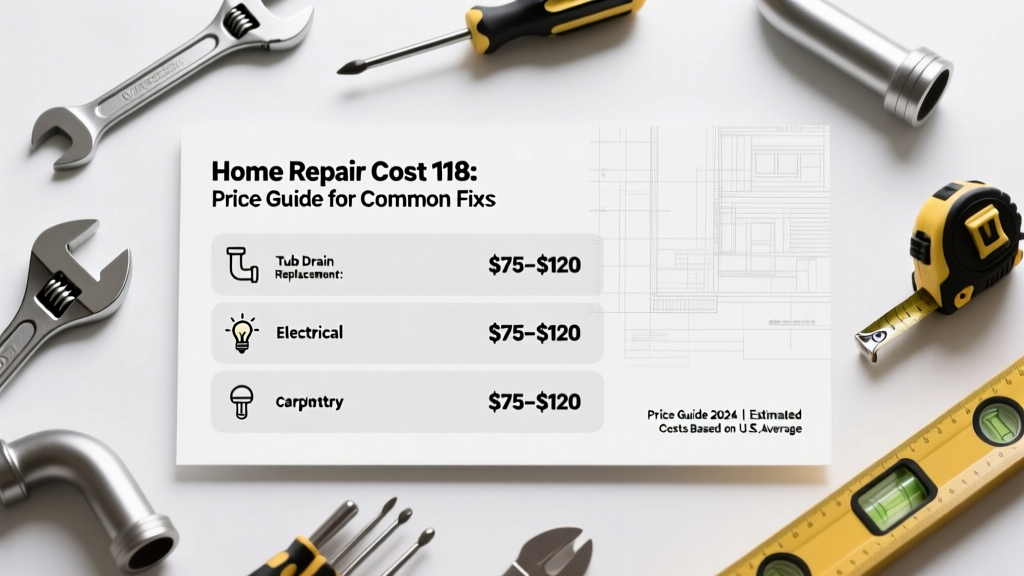
Home repair cost code '118' isn’t a universal industry standard — it’s often an internal or contractor-specific label, sometimes used for minor interior drywall patching, small ceiling repairs, or localized plaster fixes in older homes. Prices vary widely depending on scope, materials, labor rates, and regional market conditions. This guide breaks down typical services grouped under this designation, shows real-world pricing, and gives actionable ways to control costs.
Quick Price Range
| Service/Item | Low End | Average | High End |
|---|---|---|---|
| 6 sq ft drywall patch & paint | $120 | $215 | $340 |
| Plaster repair (10 sq ft, historic home) | $280 | $475 | $790 |
| Ceiling crack seal + texture match | $165 | $290 | $460 |
| Small water-damaged section replacement | $320 | $530 | $820 |
What Affects the Price
Four main variables shift the final bill — and they’re rarely obvious until you get a quote.
- Material type: Standard drywall runs $10–$15/sheet, but fire-rated, mold-resistant, or plaster-matching compounds add 20–40%.
- Access difficulty: Repairs behind cabinets, in tight attic spaces, or above stairwells require scaffolding or extra labor time — often inflating labor by 25–50%.
- Finish matching: Matching existing orange peel, knockdown, or Venetian plaster textures adds $75–$220 per area, per plaster texture matching costs data from Remodeling Magazine’s 2023 Cost vs. Value Report.
- Underlying cause: If the '118' repair masks moisture intrusion or structural movement, diagnostics and remediation push total cost up — sometimes doubling the base estimate.
DIY vs Professional
For small patches, DIY can save money — but only if you have tools, time, and tolerance for rework. Here’s how costs stack up for a typical 8 sq ft drywall repair:
| Cost Component | DIY | Professional |
|---|---|---|
| Materials (joint compound, tape, sandpaper, primer, paint) | $32–$58 | Included |
| Labor (3–5 hours @ $55–$85/hr) | $0 | $165–$425 |
| Texture matching fee (if needed) | $0 (often skipped or poorly done) | $95–$180 |
| Warranty & guarantee | None | 1–2 years (standard for licensed pros) |
Money-Saving Tips
These aren’t theoretical — they’re tactics contractors tell us homeowners overlook most often:
- Bundle multiple small repairs (e.g., three wall patches) — many pros offer 10–15% off multi-item jobs.
- Ask for ‘time-and-materials’ instead of flat-rate quotes when scope is uncertain — avoids overcharging for unknowns.
- Source your own paint — bring a sample of your existing wall color; pros charge markup on materials unless you supply them.
- Time your project for shoulder season (March–April or September–October) — some crews offer 5–12% discounts to fill gaps.
Is 'Cost Code 118' standardized across contractors?
No. The National Electrical Code (NEC) and Uniform Plumbing Code (UPC) use numbered sections, but there’s no national home repair numbering system. '118' may refer to a specific line item in your contractor’s internal estimating software — or even a project ID. Always ask for a written description of what the code includes before approving a quote.
Can I get insurance to cover a '118'-labeled repair?
Rarely — unless the damage stems from a covered peril like burst pipe water damage or wind-driven rain. Cosmetic wear, settling cracks, or aging plaster fall under maintenance exclusions. According to the Insurance Information Institute’s 2023 Home Claim Trends report, only 12% of drywall-related claims were approved when no underlying insured event was documented.
How long does a typical '118' repair take?
Most are one-day jobs — but drying time for joint compound adds 24–48 hours before painting. Plaster repairs require longer curing: lime-based plaster needs 7–10 days before priming. Rushing this step causes cracking and costly callbacks.
Do I need a permit for this type of repair?
Almost never — unless the work involves structural framing, electrical, or plumbing modifications. Patching drywall or plaster is considered cosmetic repair in all 50 states per the 2021 International Residential Code (IRC R105.2). Still, verify with your local building department if your home is in a historic district or HOA-governed community.
Why do two quotes for the same '118' job differ so much?
It’s usually about scope definition — not markup. One contractor may include sanding, priming, and touch-up painting; another may quote drywall only. According to the National Association of the Remodeling Industry (NARI), 68% of quote discrepancies stem from mismatched inclusions, not pricing strategy.
"If a quote lists '118' without a plain-English description, treat it as a red flag. Legitimate contractors describe work — not obscure codes." — Sarah Lin, NARI-certified estimator, Chicago, IL (2024)
Knowing what '118' likely covers — and how its cost breaks down — helps you spot inflated line items and avoid surprise charges. Whether you’re scheduling a quick fix or planning a larger refresh, clarity on scope and materials pays off faster than any discount. For related estimates, see our guides on drywall repair costs and plaster vs. drywall repair.