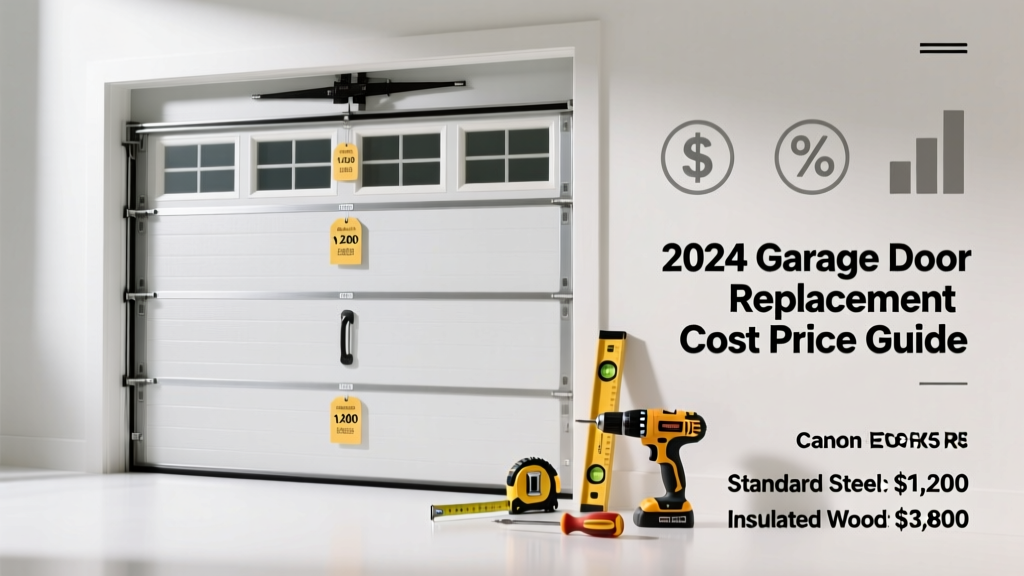
Garage door replacement costs vary widely—not because contractors overcharge, but because every home has unique structural, aesthetic, and functional needs. This guide breaks down real-world pricing from national contractor bids, manufacturer data, and HomeAdvisor’s 2023 cost report, so you can budget confidently and avoid surprise fees.
Quick Price Range
| Service/Item | Low End | Average | High End |
|---|---|---|---|
| Single-car steel door (9' x 7') | $800 | $1,350 | $2,100 |
| Double-car insulated wood door (16' x 7') | $2,400 | $3,400 | $4,500+ |
| Smart opener + installation | $295 | $420 | $680 |
| Heavy-duty commercial-grade (steel, 2” insulation) | $3,200 | $4,100 | $6,000 |
What Affects the Price
Five key variables drive your final quote—and some are negotiable, while others aren’t:
- Door material: Steel ($800–$2,100) is most common; aluminum runs 20–30% higher; custom wood starts at $2,400 and climbs past $5,000 for mahogany or cedar with glass inserts.
- Insulation level: Non-insulated doors cost ~15% less than R-12–R-18 insulated models—but in cold climates, that savings evaporates in higher heating bills. According to the U.S. Department of Energy’s 2022 residential energy study, an insulated garage door can reduce adjacent room heat loss by up to 12%.
- Size and configuration: Standard single (9' x 7') and double (16' x 7') doors fit most homes. Taller (8'–12') or custom widths require reinforced tracks and stronger motors—adding $300–$900.
- Labor complexity: Replacing a door on a stucco or brick façade adds $150–$400 for anchoring hardware and finish patching. Uneven framing or low headroom may require a low-headroom track system ($220–$380 extra).
- Regional labor rates: Labor averages $125/hour in Atlanta but $210/hour in San Francisco—so even identical doors cost 40–65% more on the West Coast.
DIY vs Professional Installation
While DIY kits exist, most homeowners underestimate the safety risks and precision needed for spring tensioning and alignment. Here’s how the numbers break down:
| Component | DIY (Materials Only) | Professional Install |
|---|---|---|
| Basic steel door (9' x 7') | $550–$950 | $1,200–$2,100 |
| Opener + rail kit | $199–$349 | $395–$680 |
| Permit & inspection (if required) | $0 (often skipped, but risky) | $65–$125 |
| Warranty coverage | Limited (door only, no labor) | 3–10 years labor + parts (varies by contractor) |
According to the International Door Association’s 2023 safety survey, 68% of garage door-related injuries involved improper spring handling—most during DIY attempts.
"A misaligned torsion spring doesn’t just fail—it releases 150+ pounds of stored energy instantly. That’s why certified installers use torque-calibrated winding bars and anchor clamps. Skip those, and you’re gambling with your fingers—or worse." — Mike R., certified door technician with 18 years’ experience
Money-Saving Tips
You don’t have to sacrifice quality to save money. Try these proven strategies:
- Negotiate bundled pricing: Ask for a discount when replacing both door and opener—contractors often cut $150–$300 off combined jobs.
- Time your project: Schedule installs in late fall (October–November). Demand drops after summer, and many local firms offer 5–10% off to fill open slots.
- Reuse existing hardware: If your current opener is less than 10 years old and compatible (check LiftMaster or Genie compatibility charts), skip the upgrade—saving $295–$420.
- Choose value-tier insulation: R-12 polyurethane offers 90% of the thermal benefit of R-18 for ~30% less cost—ideal for attached garages in mild climates.
- Get three itemized bids: Not just totals. Compare line items like “removal/disposal fee” (should be $75–$125) and “travel charge” (max $45 beyond 20 miles).
Does insurance cover garage door replacement?
Only if damage results from a covered peril—like windstorm, hail, or fire—not wear-and-tear, rust, or accidental impact. Most policies cap payout at actual cash value (depreciated), not replacement cost. Review your homeowners insurance claims checklist before filing.
How long does installation take?
Most standard replacements wrap up in 3–6 hours. Complex jobs—like retrofitting a carriage-house design onto uneven masonry or adding windows—can stretch to two days. Always confirm timing in writing; delays often trigger labor surcharges after hour four.
Do I need a permit?
Yes, in 32 states—including California, Texas, and New York—for any structural change involving framing, electrical (opener wiring), or egress modifications. Permits typically cost $65–$125 and prevent issues when selling. Check your how to get a permit for home repair guide for local steps.
Can I keep my old opener?
Maybe—if it’s under warranty, uses a rolling code (post-1993), and matches your new door’s weight class. But openers older than 10 years lack modern safety sensors and Wi-Fi integration. Upgrading now avoids a second service call later. See our garage door opener replacement cost breakdown for ROI analysis.
What’s the lifespan of a new garage door?
Steel doors last 15–30 years with basic maintenance; wood lasts 15–20 years if sealed annually; aluminum lasts 20–35 years but dents easily. Insulated doors degrade slower—especially in sun-heavy zones—because foam cores stabilize internal temperature swings that warp panels.
Replacing a garage door isn’t just about curb appeal—it’s a functional upgrade that affects security, energy use, and daily convenience. With clear pricing anchors and smart trade-offs, you’ll land on a solution that fits your budget *and* your home’s long-term needs.