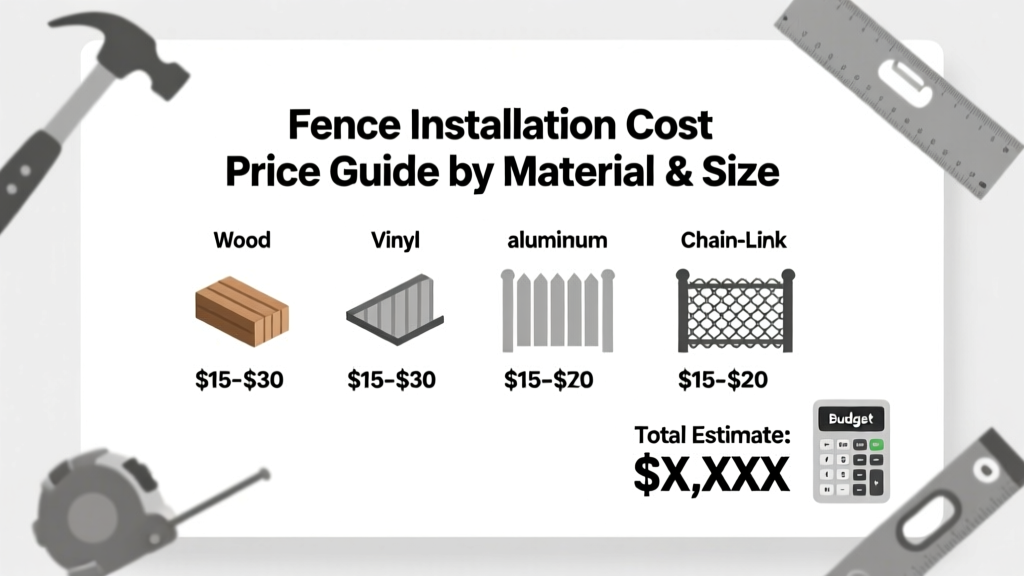
Fence installation costs vary widely — from $10 to $50+ per linear foot — depending on material, terrain, permits, and local labor rates. This guide gives you transparent, real-world pricing data (based on 2024 contractor quotes and Remodeling Magazine’s Cost vs. Value Report), explains exactly what drives those differences, and shows where you can save — or where cutting corners backfires.
Quick Price Range
| Service/Item | Low End | Average | High End |
|---|---|---|---|
| 6-ft pressure-treated pine (basic) | $12 | $18 | $26 |
| 6-ft cedar privacy fence | $22 | $32 | $44 |
| 6-ft vinyl privacy fence | $28 | $38 | $52 |
| Ornamental aluminum (4-ft) | $26 | $36 | $48 |
| Wrought iron (gate included) | $45 | $65 | $95 |
What Affects the Price
Five key variables shift your final quote — sometimes by thousands of dollars:
- Material choice: Vinyl and wrought iron cost 2–3× more than pressure-treated wood — but last 2–4× longer (according to the National Association of Home Builders’ 2023 Durability Study).
- Height and style: A 6-ft solid privacy fence requires more posts, deeper footings, and stronger framing than a 4-ft picket or ranch rail design — adding ~18% to labor time.
- Site conditions: Sloped, rocky, or clay-heavy soil increases excavation time and may require specialized equipment — raising labor costs by 20–35%.
- Permits and surveys: 62% of U.S. municipalities require permits for fences over 6 ft or near property lines (International Code Council, 2023). Fees range from $25 to $250.
- Gate(s): A single 4-ft walk gate adds $150–$400; double-drive gates with automation push costs up $1,200–$3,500.
DIY vs Professional Installation
Hiring a pro saves time and avoids costly mistakes — but DIY cuts labor costs entirely. Here’s how the math breaks down for a standard 150-linear-foot, 6-ft cedar fence:
| Cost Component | DIY Total | Professional Total |
|---|---|---|
| Materials only | $3,200 | $3,200 |
| Labor (est. 80–100 hrs) | $0 | $4,100–$5,800 |
| Permit & survey fees | $75–$225 | $75–$225 |
| Equipment rental (post-hole digger, level, etc.) | $120 | $0 |
| Total estimated range | $3,395–$3,545 | $7,375–$9,225 |
Note: Pros often get trade discounts on materials (5–15%), partially offsetting their labor markup. And licensed contractors carry liability insurance — critical if a post footing damages underground utilities.
Money-Saving Tips
You don’t have to sacrifice durability or curb appeal to stay on budget. Try these field-tested strategies:
- Choose pressure-treated pine for the frame + cedar or composite for visible rails and pickets — cuts material cost by ~25% while keeping aesthetics high.
- Stagger your install: Build the backyard section first, then add front/side sections as budget allows. Most contractors offer phased pricing.
- Get 3+ itemized bids — not just totals. Compare line items like “concrete per post” ($12–$18) and “debris removal” ($150–$300) to spot outliers.
- Time it right: Book in late fall (October–November). Demand drops after summer, and many crews offer 5–10% off to fill open slots.
- Avoid custom heights: Stick to standard 4-, 5-, or 6-ft panels. Going to 6'6" or 7' triggers engineering reviews in some cities — adding $400+ in plan review fees.
How much does a 100-foot fence cost?
At the national average of $24/linear foot (mid-tier cedar), a 100-ft fence runs $2,400–$3,600 installed. But if your yard has two 8-ft elevation changes, expect $4,200–$5,100 — grading and stepped layout add both time and structural reinforcement.
Does fence height affect cost per foot?
Yes — significantly. A 4-ft picket fence averages $16/ft; stepping up to 6-ft raises that to $24–$32/ft. Why? Taller fences need deeper post embedment (36" vs. 24" minimum), heavier posts (6×6 vs. 4×4), and wind bracing — all increasing labor and material volume.
Are vinyl fences worth the higher upfront cost?
For most homeowners, yes — if you plan to stay put 12+ years. Vinyl costs ~$38/ft installed but requires zero staining, sealing, or replacement for 25+ years. Pressure-treated pine at $18/ft needs re-staining every 2–3 years and full replacement by year 15. According to the Fence Lifespan Chart, that lifetime cost difference narrows dramatically past year 12.
Do I need a survey before installing a fence?
Legally? It depends on your municipality — but practically? Yes. 37% of fence-related neighbor disputes stem from encroaching posts or rails (American Arbitration Association, 2022). A $300–$500 survey prevents $5,000+ in removal/rebuild costs and legal fees. Many title companies include boundary maps — check your closing documents first.
How long does professional fence installation take?
A standard 150-ft, 6-ft privacy fence takes 3–5 days for a 2-person crew — assuming flat ground and no permit delays. Add 1–2 days for sloped lots, rocky soil, or custom gates. Rush jobs (under 3 days) often skip proper concrete curing or compaction, leading to leaning posts within 18 months.
Can I install a fence on a shared property line?
You can — but only with written agreement from your neighbor. In 28 states, verbal consent isn’t legally binding for structures on the line. Even with agreement, clarify maintenance responsibility and ownership in writing. A template is available in our property line fence agreement resource.
Bottom line: Fence costs aren’t random — they reflect real labor, material science, and site logistics. Knowing where to invest (like proper footings) and where to scale back (like ornamental caps on every post) puts control back in your hands. For side-by-side comparisons of top materials, see our wood vs. vinyl fence cost breakdown — including regional labor variances and HOA-compliant options.
"Most 'budget' fence failures happen not from cheap wood, but from shallow posts and undersized concrete. Spend 12% more on footings — and you’ll avoid 80% of early sagging or leaning." — Mark Delaney, certified fencing contractor with 27 years’ experience (NATC, 2024)