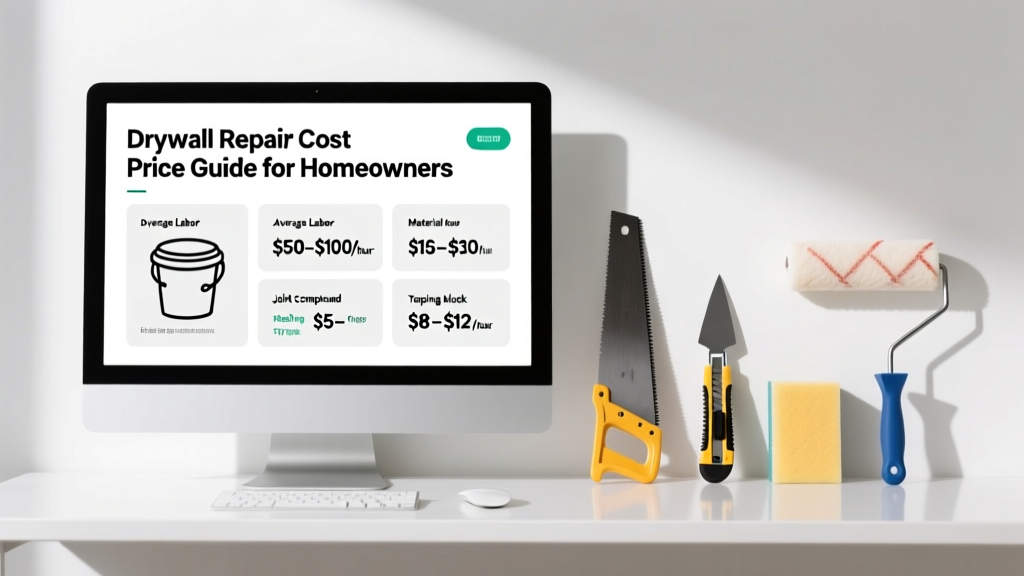
Drywall repair costs vary widely depending on damage size, location, labor rates, and whether you hire a pro or DIY. This guide breaks down real-world price ranges, explains why quotes differ, and gives actionable ways to save—backed by contractor data and home repair benchmarks.
Quick Price Range
| Service/Item | Low End | Average | High End |
|---|---|---|---|
| Small hole (1–3 inches) | $50 | $85 | $130 |
| Medium patch (6–12 inches) | $120 | $210 | $340 |
| Large section replacement (4'×8') | $280 | $475 | $720 |
| Full wall resurfacing (10'×12') | $950 | $1,420 | $2,250 |
| Water-damaged drywall removal & replace | $1,100 | $1,850 | $3,400+ |
What Affects the Price
Five key variables shift drywall repair quotes significantly:
- Damage type and extent: A nail hole costs pennies in spackle; water-saturated drywall requires framing inspection, mold testing, and disposal fees.
- Location and accessibility: Ceiling repairs cost 20–35% more than wall patches due to scaffolding or lift rental—according to HomeAdvisor’s 2024 Contractor Pricing Report.
- Finishing level: Level 4 or 5 finishes (required for smooth paint or texture matching) add $1.25–$2.75 per square foot over basic Level 3.
- Labor market: Rates range from $45/hour in rural Midwest areas to $95+/hour in metro coastal cities like San Francisco or Boston.
- Additional work: If studs are warped, wiring exposed, or insulation compromised, expect $200–$600 in added diagnostics and remediation.
DIY vs Professional
While DIY saves labor, hidden costs—and risks—add up fast. Here’s how they compare for a standard 12-inch hole in a bedroom wall:
| Cost Component | DIY | Professional |
|---|---|---|
| Materials (joint compound, tape, sandpaper, primer) | $22 | Included |
| Labor (3–4 hours at $65–$85/hr) | $0 | $260–$340 |
| Time investment (learning + sanding + repriming) | 6–10 hours | 2–3 hours |
| Risk of rework (poor texture match, cracking) | High — 38% of first-time DIYers need touch-ups (This Old House, 2023 survey) | Low — warranty typically covers 1–2 years |
| Total estimated cost | $22 + time + risk | $290–$390 |
Money-Saving Tips
You don’t have to sacrifice quality to control costs. Try these proven strategies:
- Bundle repairs: Group multiple holes or cracks in one room—contractors often discount 10–15% for multi-spot jobs.
- Supply your own drywall: For large replacements, buy sheets yourself ($12–$22 each for 1/2" standard) and ask the pro to install only.
- Time it right: Schedule non-emergency work in fall (September–October), when demand drops and contractors offer 5–10% off to fill open slots.
- Get three itemized quotes: A reputable pro will break out labor, materials, and disposal—avoid flat-rate bids that hide markup.
How much does it cost to fix a popcorn ceiling hole?
Popcorn texture repair adds complexity. Small holes (under 4") run $140–$260 because matching texture requires specialty sprayers and practice. Larger patches often mean full-room retexturing ($1.80–$3.20/sq ft) to avoid visible seams. Note: Pre-1980 popcorn may contain asbestos—testing ($250–$400) is required before repair.
Does insurance cover drywall repair?
Homeowners insurance may cover drywall repair if damage stems from a covered peril—like burst pipes, wind-driven rain, or fire—not general wear, settling, or DIY mistakes. Deductibles ($500–$2,500) apply, and insurers require documentation (photos, contractor estimate). According to the Insurance Information Institute’s 2023 claims analysis, only 12% of drywall-related claims were fully approved without dispute.
How long does drywall repair take?
A single small hole takes 2–3 hours for pros—including sanding and priming. Medium patches need 1 day (compound drying time between coats). Full wall resurfacing usually spans 2–4 days, with 24-hour drying between each of the 3–4 joint compound layers. Rush jobs cost 15–25% more for expedited scheduling and overtime.
Can I paint over patched drywall immediately?
No. Joint compound must cure fully—typically 24 hours per coat under normal humidity. Skipping this causes bubbling, poor adhesion, or flashing (shiny patches through paint). Use a moisture meter to confirm <12% moisture content before priming. As drywall pro Maria Chen of Drywall Masters Chicago advises:
"If you rush the dry time, you’ll spend twice as long fixing it later. Patience isn’t optional—it’s the cheapest tool in your kit."
Do drywall contractors charge by the hour or by the job?
Most use flat-rate pricing per repair type—but always ask for the breakdown. Hourly billing (common for diagnostic work or complex water damage) can balloon quickly. The National Association of the Remodeling Industry (NARI) recommends written contracts specifying scope, timeline, and payment schedule—especially for jobs over $1,000.
Is textured drywall more expensive to repair?
Yes—by 25–40%. Orange peel, knockdown, and skip-trowel textures require specialized tools and experience to replicate. Contractors often charge extra for texture matching ($75–$150 per patch), and mismatched texture can lower resale value. For high-end homes, consider hiring a texture specialist—find one via drywall texturing cost guide or drywall contractor checklist.
Accurate drywall repair budgeting starts with honest assessment—not just hole size, but context: age of home, moisture history, and finish expectations. Whether you’re patching a doorknob dent or rebuilding after a leak, knowing the variables helps you negotiate fairly and avoid surprise charges. For related estimates, see our guides on ceiling repair cost and water damage restoration cost.