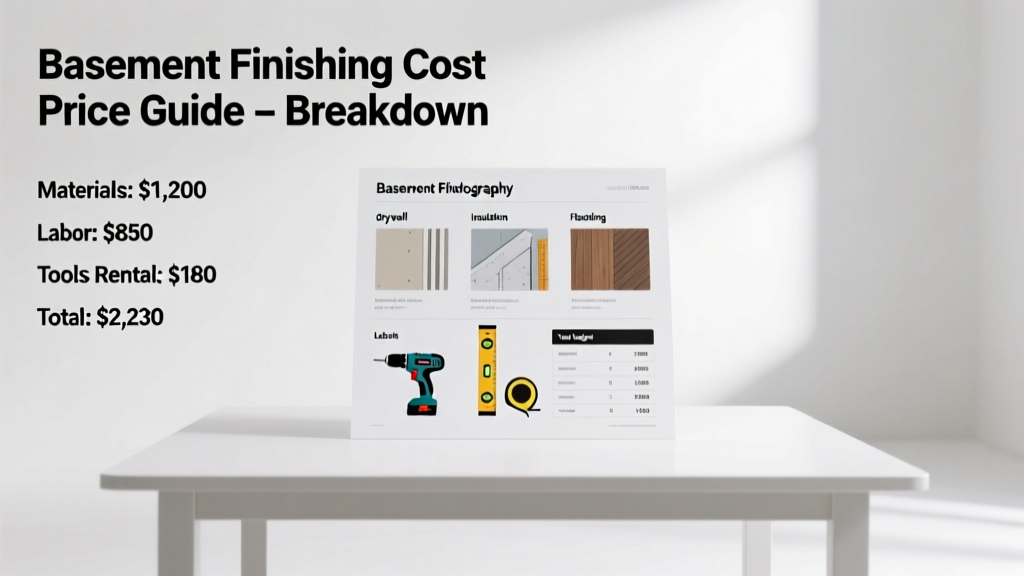
Basement finishing costs vary widely—not because contractors overcharge, but because every basement is structurally unique, legally distinct, and functionally personal. This guide breaks down actual 2024 pricing data, explains why a 1,000-sq-ft walkout in Minneapolis costs nearly double a similar project in Austin, and gives you actionable levers to control your spend—before you sign a contract or buy drywall.
Quick Price Range
| Service/Item | Low End | Average | High End |
|---|---|---|---|
| Basic finish (drywall, paint, carpet, LED lighting) | $25/sq ft | $42/sq ft | $60/sq ft |
| Mid-tier (LVP flooring, recessed lighting, egress window, insulation) | $48/sq ft | $65/sq ft | $78/sq ft |
| Luxury finish (wet bar, full bathroom, soundproofing, custom millwork) | $72/sq ft | $83/sq ft | $90+/sq ft |
| Egress window installation (per unit, including framing & permit) | $2,100 | $3,400 | $5,200 |
What Affects the Price
Five core variables explain most of the cost spread—and they’re not all under your control:
- Waterproofing needs: If your basement has active leaks or hydrostatic pressure, interior drainage + sump pump + vapor barrier can add $8,000–$15,000 before drywall goes up. According to the Basement Waterproofing Cost guide, 63% of unfinished basements in older Midwest homes require this step.
- Structural prep: Uneven floors? Load-bearing walls needing relocation? Exposed ductwork or plumbing that must be boxed in? These aren’t ‘finishing’ tasks—they’re pre-finish structural corrections that push labor time up by 20–40%.
- Permitting & inspections: Chicago requires separate electrical, plumbing, and egress permits; Portland mandates third-party energy modeling. Fees range from $320 (Raleigh) to $2,100 (Seattle), per the International Code Council’s 2024 municipal fee survey.
- Regional labor rates: Union carpenters in Boston charge $82/hr vs. $47/hr in Nashville—directly impacting framing, drywall, and trim labor totals.
- Design complexity: A straight-walled rec room with one door costs ~22% less than a multi-zone layout with soffits, built-ins, and ceiling treatments.
DIY vs Professional
Going DIY saves money—but rarely as much as people assume, especially when factoring in rework, code violations, and delayed timelines. Here’s what real projects show:
| Scope | DIY Total | Pro Total | Savings/Loss |
|---|---|---|---|
| Materials only (drywall, LVP, insulation, lighting, etc.) | $14,200 | $14,200 | — |
| Permits, engineering stamps, inspections | $1,850 | $1,850 | — |
| Labor (self-performed) | $0 | $28,600 | +$28,600 |
| Tools rental + safety gear | $1,320 | $0 | −$1,320 |
| Re-drywall, re-plumbing, failed inspections | $3,900 | $0 | −$3,900 |
| Total estimated outlay | $21,270 | $44,650 | Net savings: $23,380 — if no major errors occur |
Money-Saving Tips
You don’t need to skip insulation or use particleboard cabinets to save. Smart cuts preserve value and safety:
- Negotiate trade-offs: Ask your contractor to quote options—e.g., “Can we use standard 2x4 framing instead of fire-rated 2x6s *if* we add intumescent paint?” That swap alone saves ~$1,100 on a 1,200-sq-ft build.
- Stage the build: Finish the shell (framing, insulation, drywall, paint, lighting) first—then add flooring, cabinetry, and fixtures later. This spreads cash flow and lets you test usage patterns before committing to a wet bar.
- Reuse existing elements: If your basement already has a functional HVAC return and supply, avoid relocating ductwork. Moving a single trunk line adds $1,400–$2,600, per the HVAC Ductwork Cost report.
- Buy materials yourself (with pro guidance): Contractors markup drywall 22%, lighting 35%, and LVP 18% on average (National Association of Home Builders, 2023). But let them handle electrical panels and plumbing rough-ins—insurance and code compliance are non-negotiable.
How much does a finished basement increase home value?
Appraisers typically assign 50–70% of above-grade square footage value to finished basements—so a $60,000 finish may add $30,000–$42,000 to resale value. But that assumes full code compliance, proper egress, and no moisture issues. As certified appraiser Linda Cho told Journal of Residential Appraisal (2023):
“A basement bathroom without an egress window isn’t counted as livable space—even if it’s beautifully tiled.”
Do I need an egress window—and how much does it cost?
Yes—if you’re adding a bedroom or sleeping area. The International Residential Code (IRC R310) requires at least one operable emergency exit with minimum net clear opening of 5.7 sq ft. Installation includes cutting through concrete, framing, flashing, grading, and permitting. Average cost: $3,400 (range: $2,100–$5,200). Skip it only if your basement won’t include bedrooms—or if you install a second stairwell meeting IRC width/height specs.
Is finishing a basement worth it for rental income?
Yes—if local zoning allows accessory dwelling units (ADUs) and you meet occupancy codes. In Denver, a finished 700-sq-ft basement with kitchenette and bathroom rents for $1,350/mo (Rentometer, Q2 2024). But factor in $1,800–$3,200 in ADU-specific upgrades: separate metering, fire separation, independent HVAC controls, and city inspection fees.
What’s the cheapest way to finish a basement on a tight budget?
Focus on habitability—not aesthetics. Prioritize: moisture mitigation (vapor barrier + dehumidifier), insulation (R-11 min in walls, R-19 in ceiling), fire-rated drywall on ceilings, and egress compliance. Then use peel-and-stick LVP, builder-grade LED fixtures, and semi-gloss paint. Skip crown molding, wainscoting, and recessed lighting banks. You’ll land near $30/sq ft—and still pass inspection.
How long does basement finishing take?
Typical timeline: 6–12 weeks for a 1,000–1,500-sq-ft mid-tier finish. Delays most often come from waiting for inspections (especially framing and rough-in), material backorders (notably drywall and LVP), or unexpected water intrusion discovered during demo. Pro tip: Build a 10-day buffer into your contract’s completion date clause—most reputable contractors accept this without markup.
Finishing a basement isn’t just about square footage—it’s about risk management, code alignment, and long-term utility. Whether you’re building a home gym, guest suite, or rental unit, anchoring your budget in real-world variables—not brochures or online calculators—keeps expectations grounded and outcomes durable. For related planning steps, see our guides on basement evaluation checklists and basement lighting cost breakdowns.