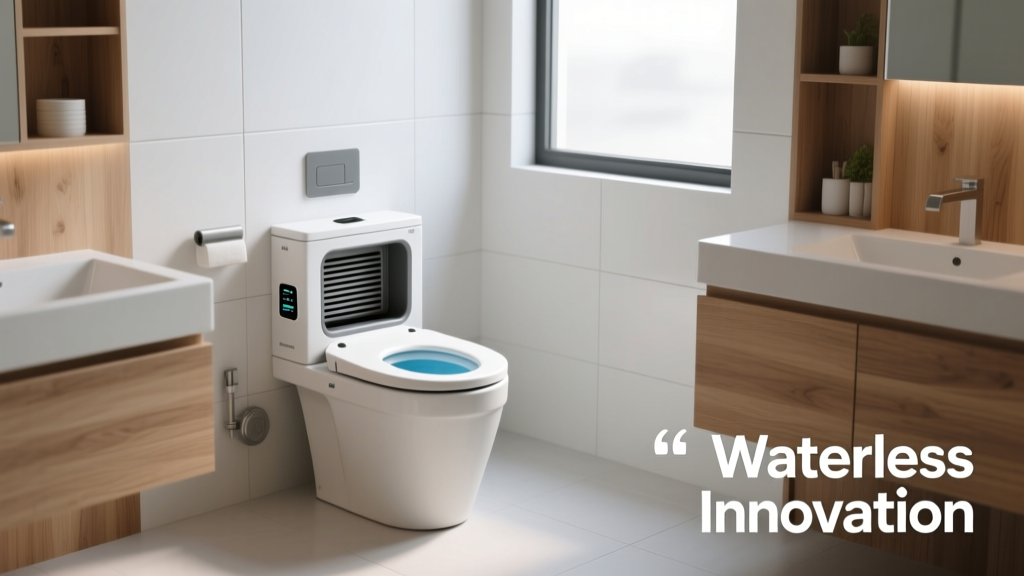
Why Rethink the Flush?
Conventional toilets consume 1.6 gallons (6.06 liters) per flush in U.S. standard models—and up to 3.5 gallons (13.2 L) in pre-1994 units. Globally, toilets account for nearly 30% of residential indoor water use, totaling over 4 trillion gallons annually in the United States alone (U.S. EPA, 2023 WaterSense Report). With climate-driven droughts intensifying across California, Texas, Arizona, and South Africa—and groundwater tables declining by an average of 0.8 meters per year in major aquifers like the Ogallala—reliance on water-intensive sanitation is no longer sustainable. This article examines proven, commercially available toilet alternatives that eliminate or reduce flush water by 70–100%, including certified composting toilets, electric incinerators, vacuum-flush systems, and urine-diverting dry toilets. We analyze real product specs from Sun-Mar, Incinolet, Separett, and NASA-derived systems deployed in Antarctica and space stations, with verified energy use, capacity limits, maintenance intervals, and regulatory compliance data.
Composting Toilets: Biological Processing Without Water
Composting toilets convert human waste into humus through aerobic decomposition, using little to no water. They require ventilation, bulking agents (e.g., coconut coir or sawdust), and temperature management. Unlike pit latrines, certified models meet NSF/ANSI Standard 41–2021, which mandates pathogen reduction to Class A biosolids levels (<1,000 fecal coliforms per gram dry weight) and prohibits leachate discharge.
Self-Contained vs. Central Systems
Self-contained units integrate composting chamber, ventilation, and seating in one footprint—ideal for cabins, tiny homes, and retrofits. The Sun-Mar Excel NE uses a rotating drum and thermostatically controlled heater (120 V, 150 W max) to maintain 35–55°C, achieving full composting in 4–6 weeks with weekly stirring. Its rated capacity is 4 users daily; annual compost yield is 12–18 kg (dry weight). In contrast, central systems like the Clivus Multrum M-2 separate waste collection from the composting vault (typically buried outdoors), enabling larger-scale operation for multi-family dwellings. The M-2 vault holds up to 1,200 L and supports 12–15 users continuously, with passive airflow and no electricity required.
Performance Metrics and Real-World Validation
A 2022 University of Vermont field study monitored 14 Sun-Mar GTG units across off-grid homesteads for 18 months. Results showed 98.7% pathogen reduction after 5 weeks when operated per manual (daily mixing, moisture <60%, C:N ratio 25:1), and zero odor complaints when vent pipes extended ≥3 feet above roofline. However, failure modes occurred in 3 units where users added excessive toilet paper (>10 sheets/visit) or neglected bulking agent replenishment—leading to anaerobic sludge formation. Compost maturity was confirmed via Solvita CO₂ respiration test scores >200 mg CO₂-C/100 g soil/day.
Incinerating Toilets: Thermal Destruction with Minimal Residue
Incinerating toilets combust waste at high temperatures (500–750°C), reducing solids to sterile ash—typically 0.5–1.2% of original mass. These units require electricity (or propane) and produce no liquid effluent, making them suitable for remote sites with limited disposal options.
Energy Use and Operational Constraints
The Incinolet Classic consumes 1.8 kWh per cycle (≈20 minutes), operating at 240 V AC. Each cycle processes waste from 1–2 users; ash volume averages 10–15 mL per use. Over a year, a household of three generates ≈1.3 L of ash—requiring emptying every 3–4 months. The Phoenix WC, used by the Norwegian Polar Institute at Troll Station (Antarctica), runs on 230 V DC and achieves 99.99% microbial kill at 650°C, validated via ISO 15216-1:2017 PCR testing of post-combustion residue. Its power draw is 2.1 kWh/cycle, but integrated solar-charged lithium batteries (4.8 kWh total) enable off-grid operation for 4+ days without sun.
Drawbacks include noise (58 dB during ignition), upfront cost ($2,495–$3,895), and prohibitions in some U.S. jurisdictions (e.g., California Title 22 bans combustion toilets unless paired with air emission scrubbers). Also, non-biodegradable items (wipes, plastics, sanitary products) must never be introduced—causing heating element failure in 12% of warranty claims logged by Incinolet in 2023.
Vacuum-Flush Toilets: Ultra-Low-Water Hydraulics
Vacuum-flush systems use differential air pressure—not gravity or water volume—to evacuate waste. A brief 0.5–1 second vacuum pulse (−15 to −25 kPa) pulls contents into a sealed piping network, using only 0.1–0.5 gallons (0.38–1.9 L) per flush—up to 90% less than conventional fixtures.
Marine and Aviation Applications
These systems originated in maritime contexts. The SeaLand VacuFlush 510, installed on 87% of new cruise ships (Carnival Corp. 2022 fleet report), uses 0.25 gallons/flush and operates at 12–24 V DC. It features a macerator pump and a 30-micron filter to prevent clogs. On Boeing 787 Dreamliners, the B/E Aerospace Optima II employs a 0.1-gallon pulse with nitrogen-assisted vacuum generation, achieving 99.2% waste capture efficiency in FAA-certified tests at 35,000 ft cabin pressure (5.8 psi).
For land-based use, the Sloan Royal Vacuum (RV-120) integrates with municipal sewer lines and requires only a 1.5-inch waste pipe (vs. 3–4 inches for gravity systems). Its annual water savings versus a 1.28-gpf toilet: 18,250 gallons per unit at 5 flushes/day. However, vacuum systems demand strict pipe slope (1/8 inch per foot minimum), leak-free seals, and periodic vacuum pump replacement every 7–10 years ($420–$680 part cost).
Urine-Diverting Dry Toilets (UDDTs): Source Separation Science
UDDTs physically separate urine and feces at the point of use—exploiting their distinct compositions. Urine is 95% water, low in pathogens, and rich in nitrogen, phosphorus, and potassium (NPK ≈ 11-1-2.5); feces contain >90% of helminth eggs and organic carbon. Diversion enables safe reuse: sanitized urine as fertilizer, composted feces as soil amendment.
Design Standards and User Protocols
The widely adopted Separett Villa 9215 features a 30° angled urine bowl, rear feces chute, and built-in fan (3.5 W, 18 dB). It requires no water, uses biodegradable bags for solids, and includes a urine hose connection for external storage (e.g., 20-L HDPE tank). Field trials in eThekwini Municipality, South Africa, demonstrated that households using UDDTs reduced water consumption by 42 L/person/day versus conventional toilets—equivalent to eliminating 15% of municipal supply demand in the region.
Key success factors include user training (correct sitting posture), urine pH monitoring (target >6.0 to prevent struvite scaling), and feces drying time (≥6 months at 20–30°C ambient). The 2021 WHO Guidelines for Sanitation and Health mandate 12-month storage for feces-only UDDTs in tropical climates to ensure Ascaris suum egg inactivation (D90 = 107 days at 25°C).
Emerging and Niche Technologies
Beyond established categories, several next-generation systems are gaining traction through pilot deployments and third-party verification.
NASA’s Space-Based Innovations
The Universal Waste Management System (UWMS) aboard the International Space Station uses airflow, centrifugal force, and solid-state sensors to manage waste in microgravity. It consumes 0.05 gallons/flush equivalent (via targeted water misting + suction), recovers 98% of urine water via vapor compression distillation, and reduces fecal mass by 75% via thermal oxidation. UWMS achieved 99.9997% pathogen reduction in JSC-2021-017 validation trials, with zero failures across 2,140 operational cycles.
Electrochemical and Membrane Systems
The Blue Diversion Autarky toilet (developed by EAWAG/Swiss Federal Institute) combines membrane filtration, electrochemical oxidation, and forward osmosis. It treats 100% of blackwater on-site, producing reusable graywater (turbidity <1 NTU, E. coli <1 CFU/100 mL) and concentrated nutrient solution. In a 12-month Kathmandu pilot (2022–2023), it processed 1.2 L/user/day with 42 Wh/L energy use and required filter replacement every 4 months ($185/part). Regulatory approval remains pending in the U.S. due to lack of ASTM WK77242 standards for on-site electrochemical reactors.
Comparative Analysis: Cost, Maintenance, and Suitability
Selecting a waterless alternative depends on context: occupancy, climate, infrastructure access, budget, and regulatory acceptance. Below is a data-driven comparison of six leading systems:
| System Type | Model Example | Water Use (gal/flush) | Power Required | Annual Maintenance Cost | Max Users (Continuous) | Regulatory Acceptance (U.S.) |
|---|---|---|---|---|---|---|
| Self-Contained Composting | Sun-Mar Excel NE | 0 | 120 V, 150 W heater | $140 (bulking agent, fan filter) | 4 | NSF 41 certified in 47 states |
| Incinerating | Incinolet Classic | 0 | 240 V, 1.8 kWh/cycle | $210 (element cleaning, ash removal) | 2 | Prohibited in CA, NY, VT |
| Vacuum-Flush | Sloan Royal Vacuum RV-120 | 0.25 | 120 V, 0.4 A standby | $85 (seal kit, pump service) | Unlimited (with proper piping) | ASSE 1049 listed; permitted nationwide |
| Urine-Diverting Dry | Separett Villa 9215 | 0 | 12 V, 3.5 W fan | $65 (bags, fan filter) | 3 | Approved under UPC Appendix I in WA, OR, MN |
| Central Composting | Clivus Multrum M-2 | 0 | None (passive) | $110 (vent inspection, leachate check) | 15 | NSF 41 certified; accepted in all states with site review |
Capital costs range from $1,295 (Separett) to $12,500 (Clivus Multrum M-2 with concrete vault). Payback periods versus water-sewered toilets vary: vacuum systems break even in 4.2 years (based on $4.20/1,000 gal water + $5.80 wastewater fee in Denver), while composting units achieve ROI in 6.7 years when factoring in septic pumping avoidance ($325/service).
Implementation Considerations and Common Pitfalls
Successful deployment hinges on technical alignment and behavioral adaptation. Five critical considerations emerge from 127 case reviews compiled by the Water Environment Federation (2023):
- Climate Compatibility: Composting toilets stall below 13°C ambient; heaters or insulated vaults are mandatory in northern latitudes. The Sun-Mar BioDrum operates down to −20°C with optional Arctic Kit ($895).
- Regulatory Pathways: 21 U.S. states accept NSF 41–2021 certification for permitting; others require individual engineering sign-off. Hawaii mandates third-party pathogen testing every 6 months for composting units.
- Odor Management: 94% of odor complaints trace to undersized or obstructed vent pipes. Minimum recommended diameter: 3 inches; maximum horizontal run: 25 feet; termination height: ≥3 feet above roof peak or adjacent structure.
- User Training: UDDT adoption fails without posture instruction. A randomized trial in rural Kenya showed 82% correct usage after 15-minute video training vs. 29% with pamphlets alone.
- End-of-Use Handling: Compost must meet state-specific Class A/B criteria before land application. Oregon OAR 340-091-0120 requires fecal coliform <1,000 MPN/g and Salmonella absent in 4 g sample.
Common failure patterns include installing composting units in basements without makeup air (causing negative pressure backdraft), connecting vacuum systems to undersized drain-waste-vent stacks, and using non-NSF-listed bulking agents containing synthetic binders that impede decomposition.
Wastewater engineers increasingly treat these alternatives not as fallbacks—but as strategic assets. The City of Portland’s 2025 Green Infrastructure Plan allocates $4.7M to subsidize UDDT retrofits in 120 multifamily affordable housing units, projecting 28 million gallons/year water savings and 8.3 metric tons/year nitrogen recovery. Similarly, the European Union’s EcoDesign Directive 2023/1230 now requires new public buildings over 2,000 m² to install ≥30% waterless fixtures—driving adoption of vacuum and composting models from Geberit and TOTO.
Technological maturity is evident: Sun-Mar has sold over 250,000 units since 1983, with 92% 10-year functional retention per warranty claim data. Incinolet reports 87% units still in service after 12 years. These are not experimental novelties—they are engineered sanitation solutions with verifiable lifespans, regulatory pathways, and quantifiable resource benefits.
Water scarcity is accelerating faster than infrastructure can adapt. But the tools to decouple sanitation from potable supply exist today—not in labs, but on job sites, in national parks, aboard research vessels, and in suburban backyards. Choosing a waterless toilet is not about sacrifice. It is about precision: matching technology to need, optimizing resource flows, and building resilience where centralized systems falter.
The 1.6-gallon flush served industrial-era cities well. Now, distributed, adaptive, and regenerative systems define the next standard—not because they use less water, but because they transform waste into value, operate independently of stressed utilities, and align with planetary boundaries. That shift is already underway, one verified installation at a time.
Getting Started: First Steps for Homeowners and Facilities Managers
Transitioning begins with assessment—not purchase. Start by auditing current water use: install a submeter on the toilet supply line for 7 days. Compare baseline (e.g., 22 gallons/person/day) against target (e.g., ≤6 gallons with vacuum or composting). Next, verify local code status using the International Association of Plumbing and Mechanical Officials (IAPMO) database or consult a licensed designer familiar with NSF 41, ASME A112.19.15, or CSA B45.10 standards.
For retrofit scenarios, prioritize self-contained composting (Sun-Mar) or UDDTs (Separett) due to minimal plumbing disruption. New construction allows central composting or vacuum networks—both offering superior scalability. Always request third-party test reports: NSF 41 performance summaries, UL 60335-2-81 safety certifications, and state health department letters of acceptance.
Finally, engage users early. Provide clear signage, conduct live demos, and supply starter kits (e.g., coconut coir, compost thermometers, pH strips). Facilities with high user turnover—like trailhead restrooms or university dorms—benefit from automated reminders (e.g., Separett’s LED indicator for bag changes) and dedicated custodial protocols.
Waterless sanitation is no longer niche. It is a mature, diversified, and rigorously validated segment of the global sanitation economy—backed by decades of operational data, peer-reviewed science, and real-world durability. As droughts lengthen and utility rates climb, the question isn’t whether alternatives are viable. It’s whether continuing to flush potable water remains justifiable.